Plants are way cooler and brighter than we think.
They are not just green and leafy but also sneaky and intelligent like humans.
Sometimes, they are pretty stunning, and their abilities will leave you in wonderment.
However, on green planets, many plants hold extraordinary secrets.
In this article, join me as we explore mind-blowing facts about plants that will amaze us.
Want more fun facts? – Visit here
Discover the Nature’s Hidden Geniuses
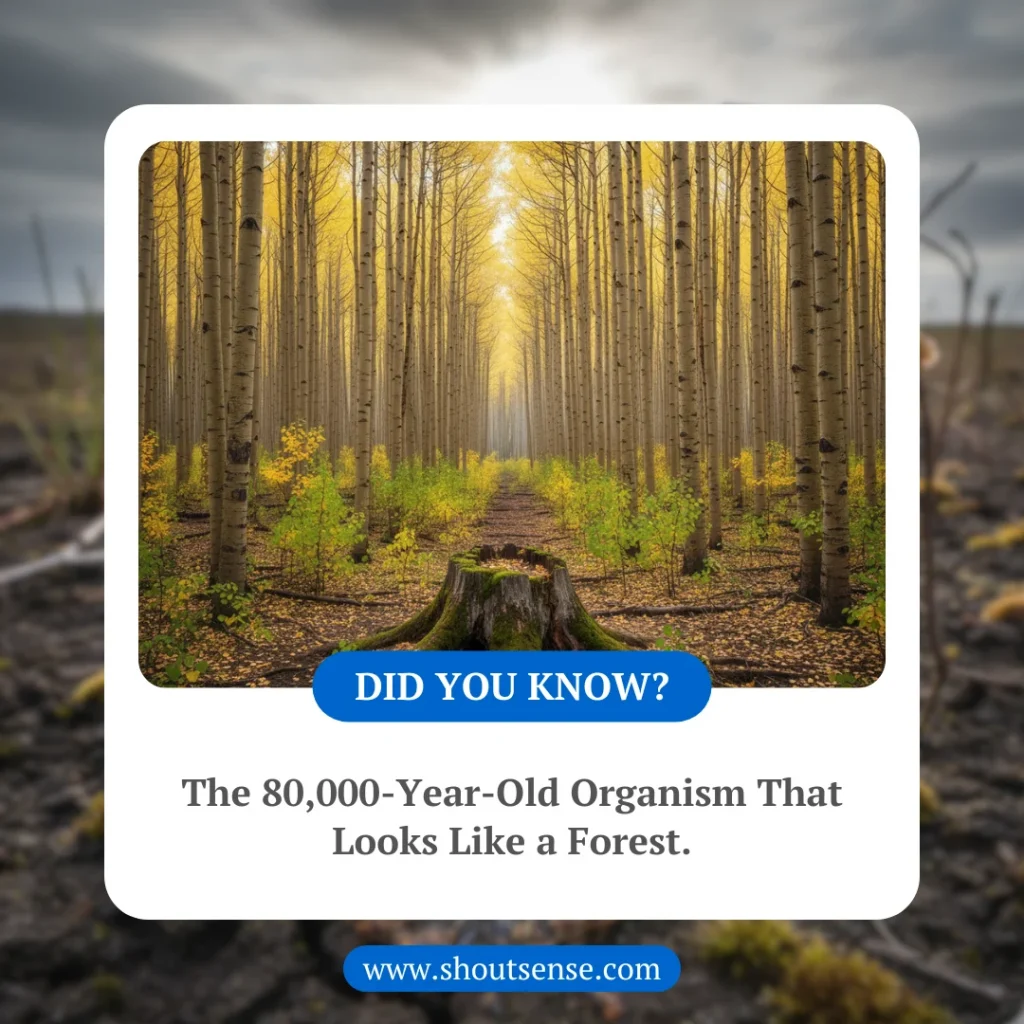
1. The 80,000-Year-Old Organism That Looks Like a Forest
What do people usually think?
When it comes to the world’s oldest trees, most people instantly point to the towering Sequoias or the legendary Bristlecone pine.
Their size and history make them seem like an obvious answer.
It’s challenging to believe, but none of those mentioned above truly holds the peak.
Here’s the astonishing reality:
Indeed, every tree you see in the forest is not an individual at all; it’s just a shoot of Pando, the incredible clonal colony often called “The Trembling Giant.”
The Pando is a colony of aspens in Utah and has been alive for over 80,000 years.
The reason it lives for many years is that its roots have survived thousands of years.
According to Live Science, the Pando tree reproduces asexually, generating identical clones of itself.
Moreover, the root system of this tree produces identical shoots, filling the gap between the stems or replacing the old ones, which makes this organism alive.
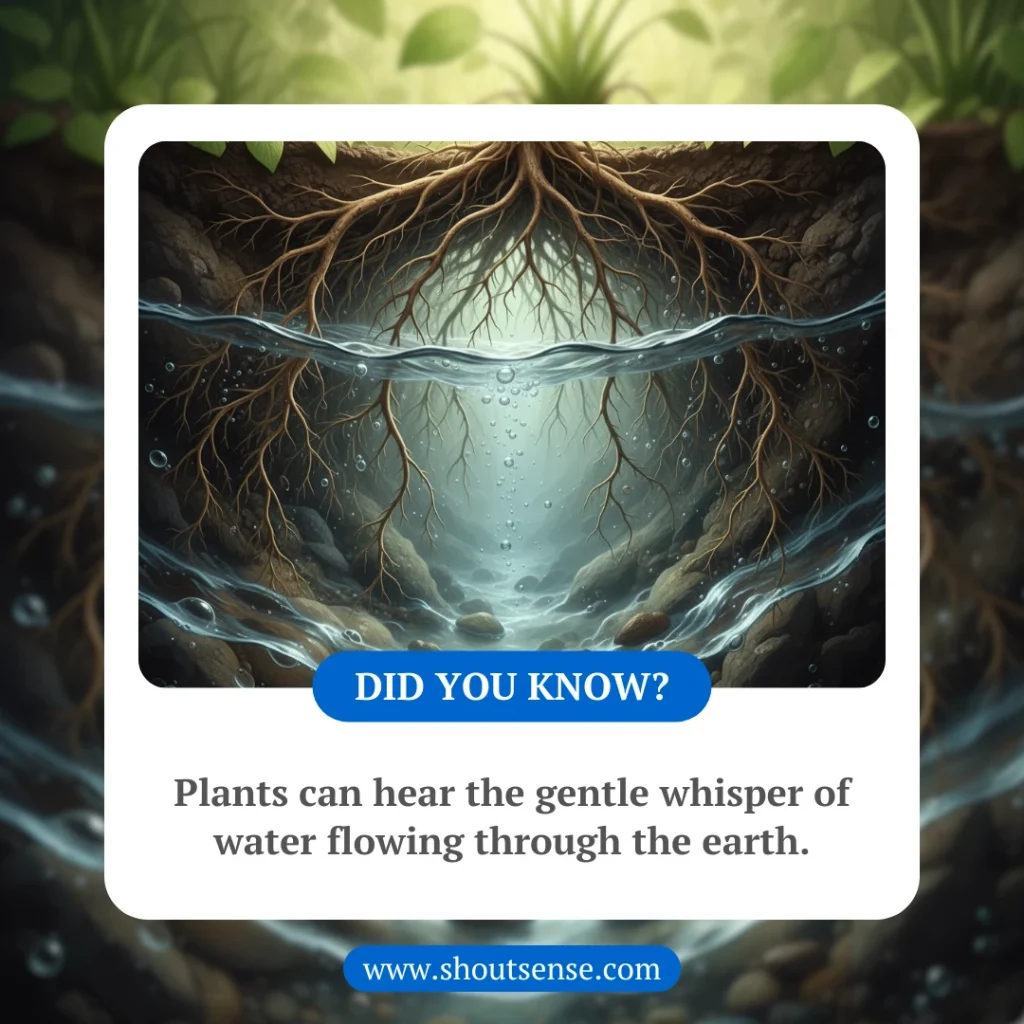
2. Plants can hear the gentle whisper of water flowing through the earth.
What do people usually think?
Most people think of plants simply sitting quietly, absorbing the sun, and waiting for their time until it rains.
They seem motionless and quiet.
It might surprise you to learn that plants can hear water through their roots.
Here is the astonishing reality:
Contrary to appearances, plants are not passive because they can hear water flows.
Their roots are like radar, and they look for hints, much like a detective.
In one experiment, researchers found that even in dry soil, pea plant roots can detect the sound of water passing through pipes.
The amazing thing is that plants can use their abilities as an internal GPS.
Its roots move toward actual moisture when given the option.
On the other hand, when there is no moisture present, its roots follow the vibrations of water.
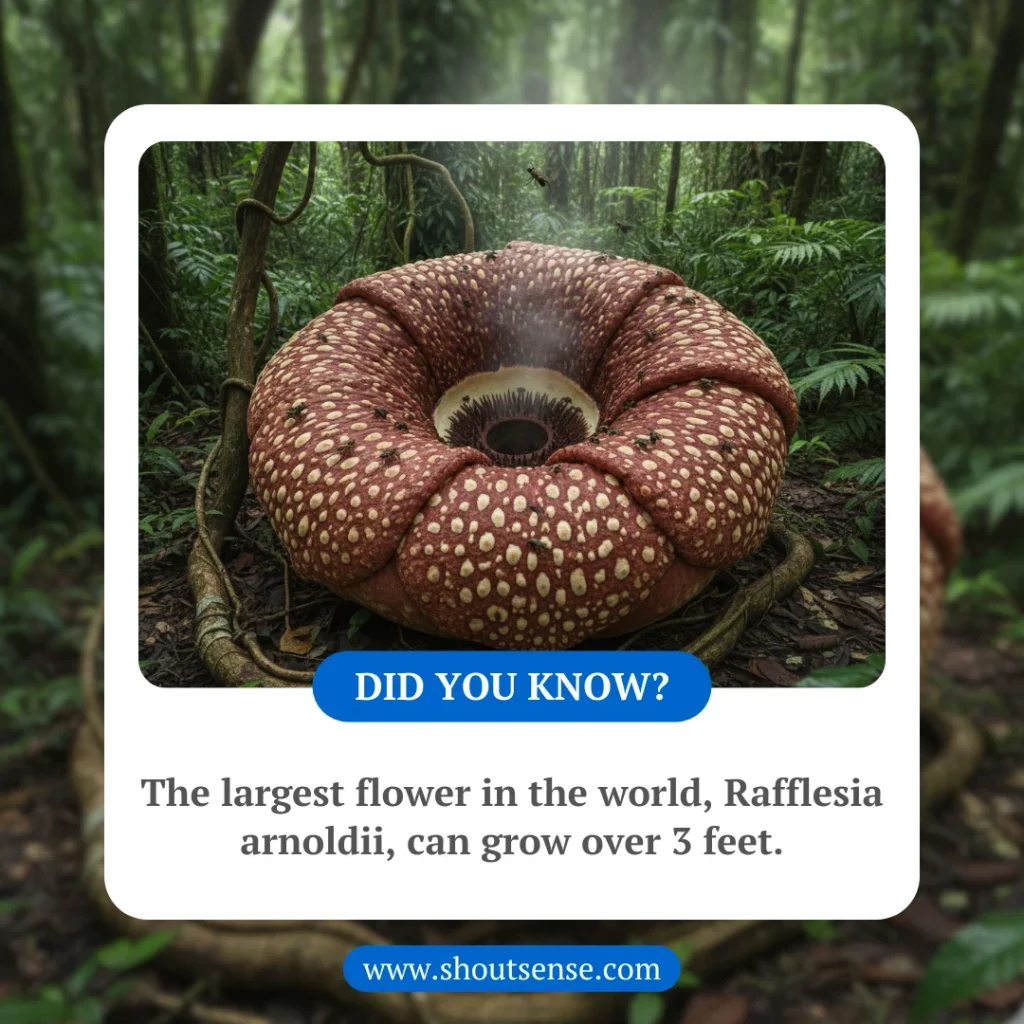
3. The largest flower in the world, Rafflesia arnoldii, can grow over 3 feet.
What do people usually think?
Many individuals imagine Rafflesia arnoldii is the same as other flowering plants that have a small to medium size.
However, you won’t believe that Rafflesia arnoldii is the largest flower in the world, which can grow over 3 feet wide.
Here is the astonishing reality:
The flower Rafflesia arnoldii, also known as “corpse flower,” can grow over three feet wide, making it the largest individual flower on Earth.
The Rafflesia arnoldii is known as the “corpse flower,” whose smell is so terrible that it attracts flies that become its pollinators.
Additionally, this plant’s bloom lasts only a few days, reminding us just how unpredictable Mother Nature can be.
It is the world’s largest flower that grows deep in the woods of the rainforests in Southeast Asia. Its massive, bright red petals may look striking, but instead of releasing a sweet fragrance, this plant fills the air with the stench of rotting flesh.
Unlike other plants, Rafflesia does not make its food from sunlight. Instead, it survives as a parasite, pulling all of its nutrients and water from a host vine in the grape family.
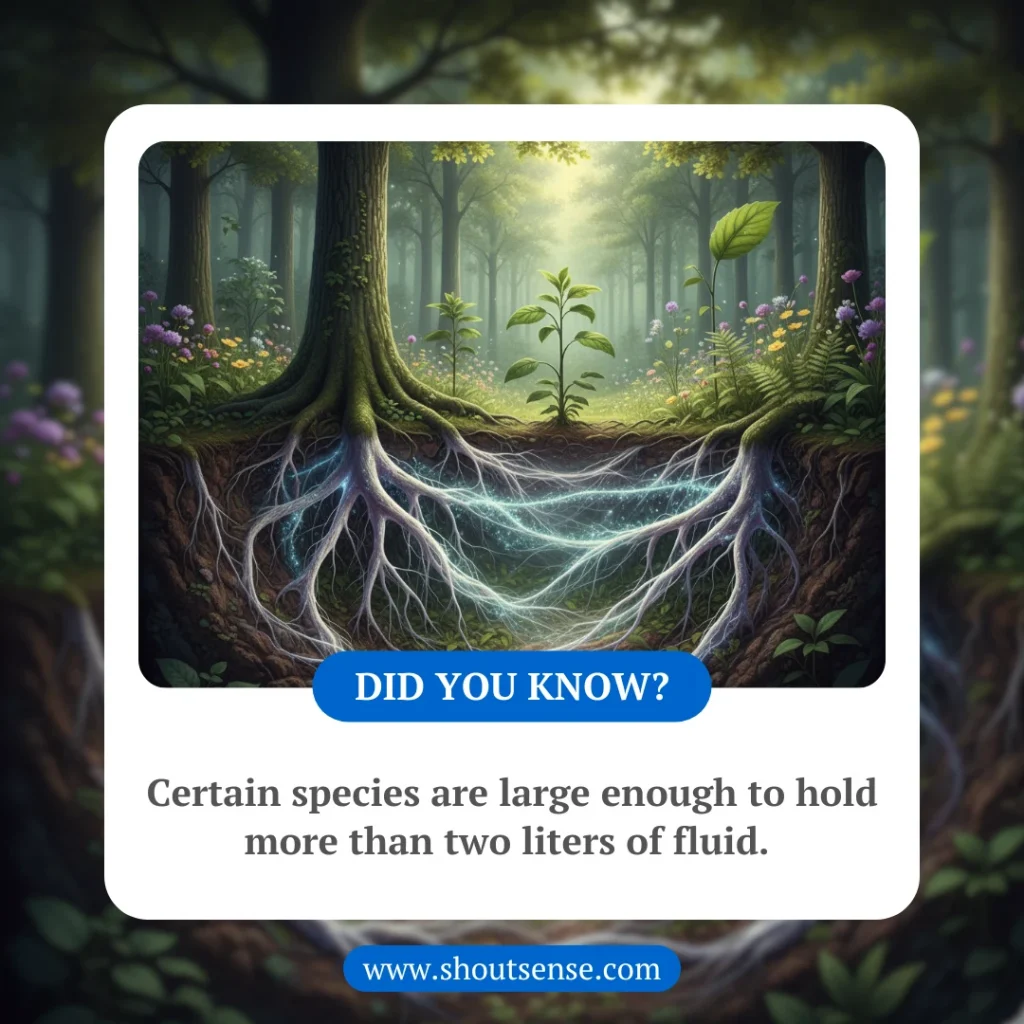
4. Plants Gossip Through Underground Fungal Networks.
What do people usually think?
Most people assume plants stand there quietly, growing on their own without any interaction.
People saw them as quiet and unaware of what the others around them were doing.
Contrary to popular belief, plants are like humans that can communicate with each other.
Here is the astonishing reality:
Plants are like humans, as they talk and gossip, too.
Plants, like humans, have their way of communicating through mycorrhizal networks as they share nutrients, warn neighbors about pests, and help each other survive.
Science refers to this communication as the Wood Wide Web, where plants connect their roots to share nutrients, communicate, and warn.
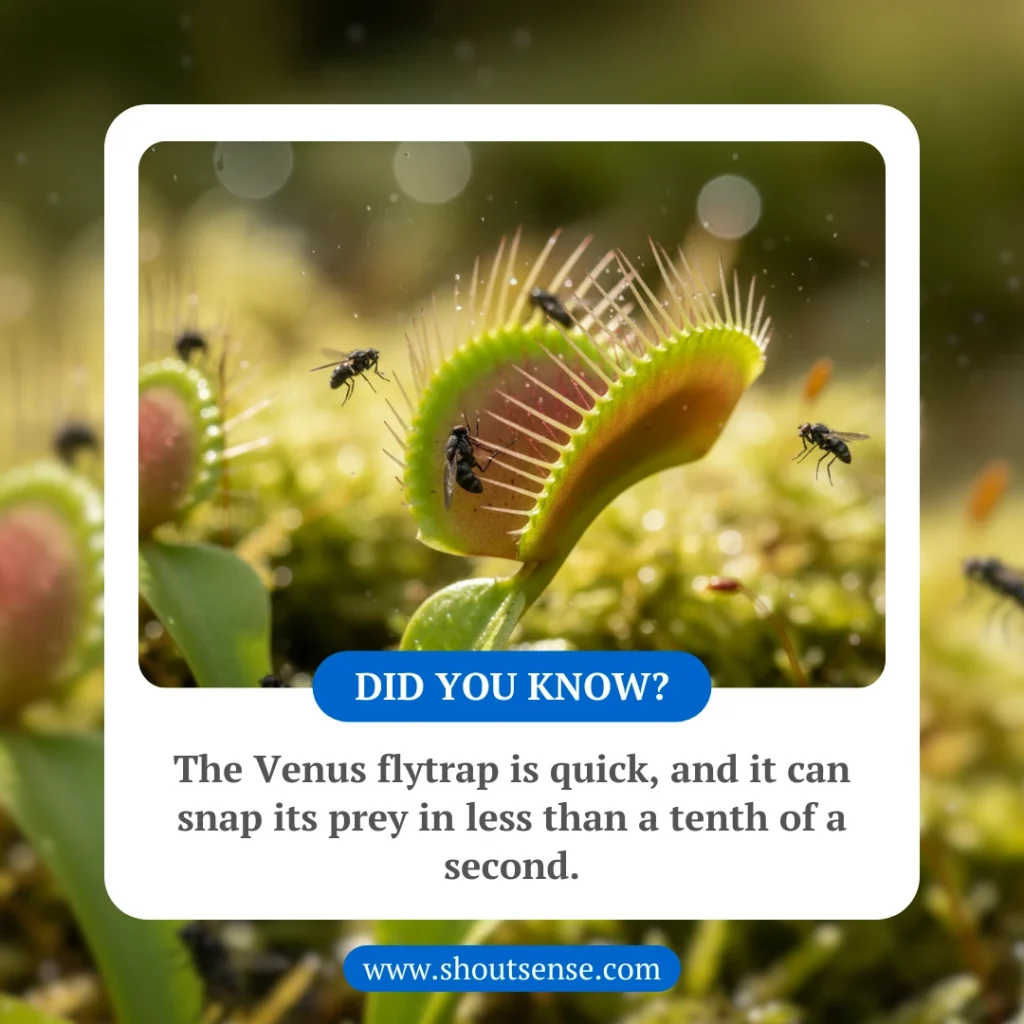
5. The Venus flytrap is quick, and it can snap its prey in less than a tenth of a second.
What do people usually think?
Most people believe plants are slow to show movement.
They visualize leaves stretching towards the sunlight or flowers opening for hours or days.
But the idea of a plant reacting instantly to its surroundings appears unbelievable.
Here is the astonishing reality:
The Venus flytrap shuts in under 0.1 seconds, and tiny hairs inside its leaves sense movement.
These plants don’t use their muscles to trap insects; rather, they use the water pressure within their cells and then instantly close their traps.
This mechanism happens when insects trigger their “trigger hairs.”
Mind-Blowing Facts Wrap-up
Green planets are not uninteresting; rather, they are dramatic, clever, and always full of extraordinary stories.
Like plants, they might seem quiet, but they are always blossoming in ways that will amaze us.