Ever wondered what it would be like if a plant could snap shut like a trap?
Imagine a leafy predator lying in wait, silently stalking its next meal.
Welcome to the world of the Venus flytrap—a tiny but fierce hunter of the insect world.
In this article, we’ll uncover fascinating, fun facts about the Venus flytrap, from their lightning-fast snap to clever insect-luring tricks, and reveal how these remarkable carnivorous plants survive and thrive in their mysterious wetland homes.
A Clever Carnivorous Plant with Deadly Tricks.
1. Each trap can only close several times before it dies.
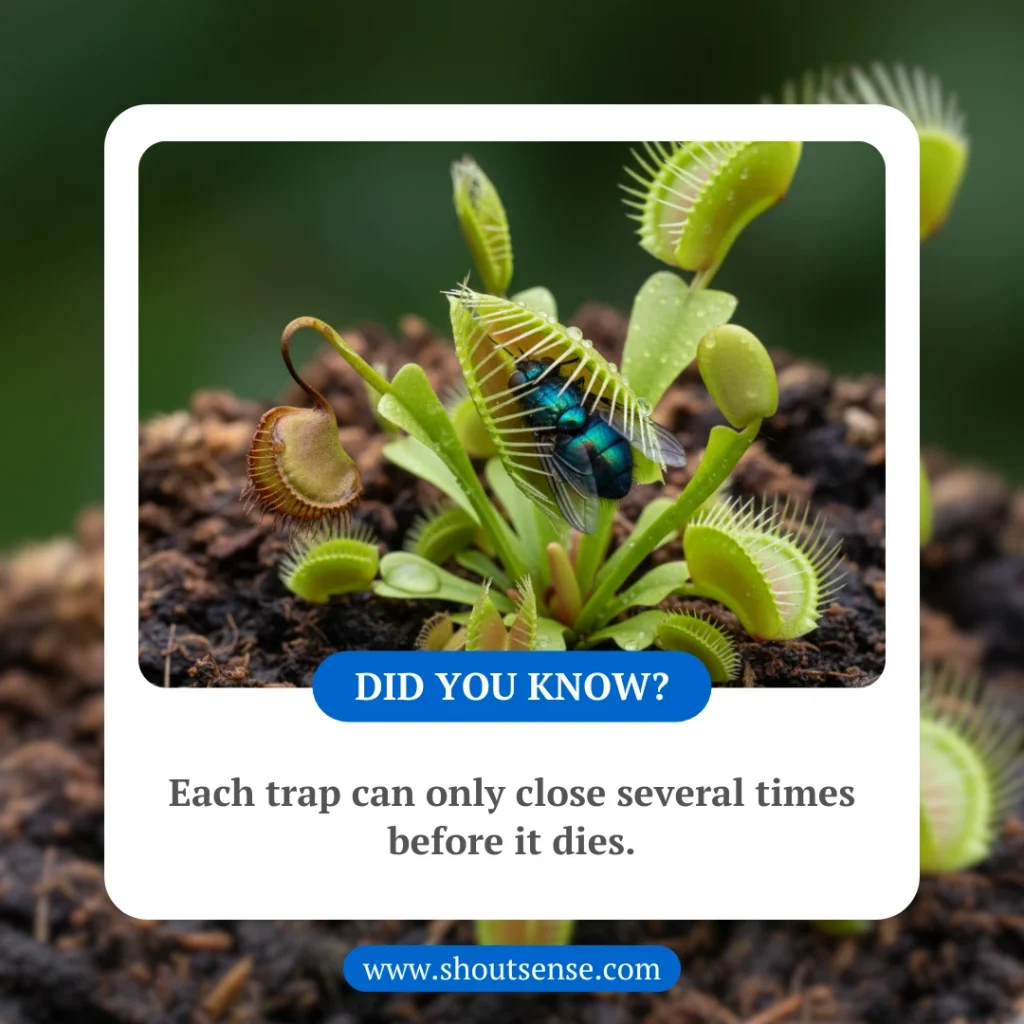
The brilliant green trap is a beautiful disposable weapon; its power is brief, and its short life is spent after only a few glorious strikes.
The Venus Flytrap’s trap is like a deadly machine that can snap prey in less than a second.
However, its trap is not invincible.
According to the Pet Fly Trap, the Venus Flytrap traps only closes several times, then it dies and falls off.
To survive, this plant uses its other leaves or traps to hunt prey while waiting for other leaves to regrow.
So, every closure is a life-or-death gamble on this plant, carefully timed to capture only real prey.
In the world of the Venus flytrap, mistakes are costly.
2. A single Venus flytrap can catch hundreds of insects over its lifetime.
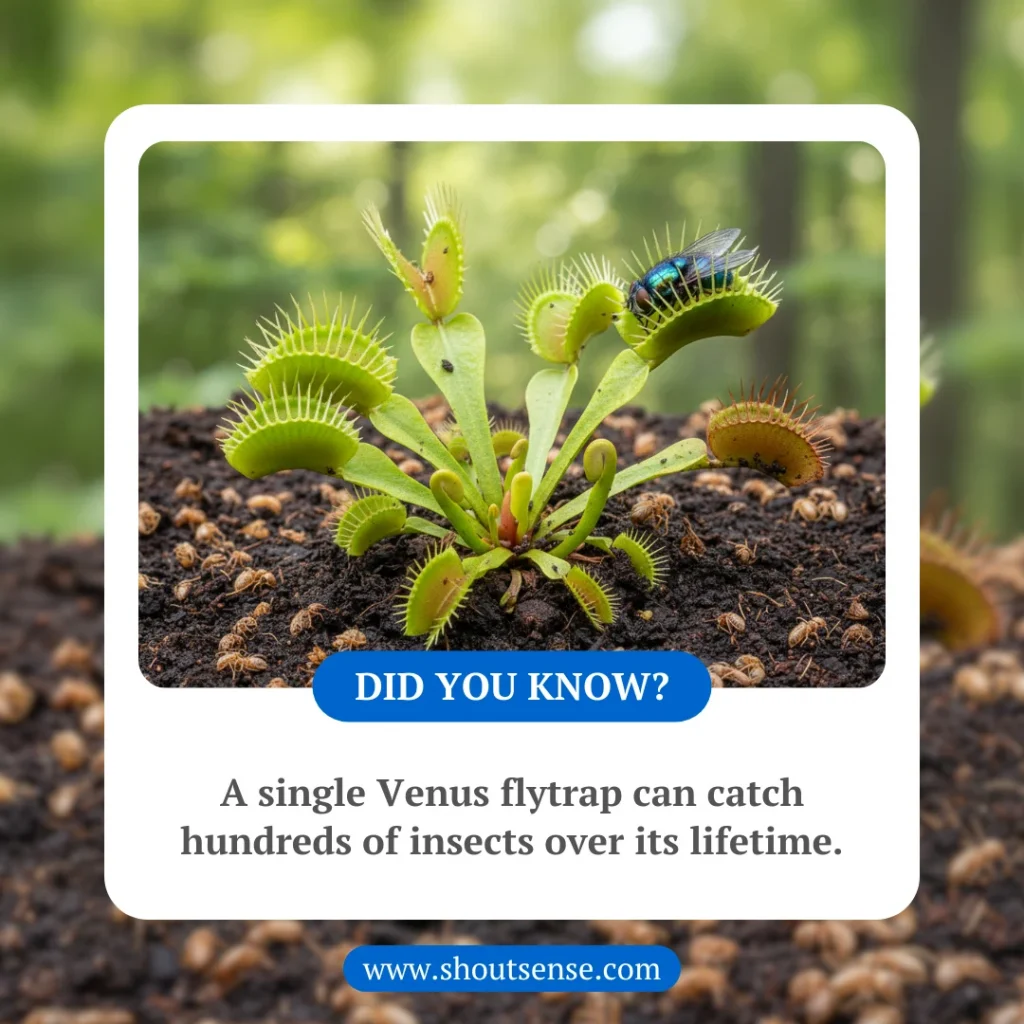
Every kill is precious because the brilliant green trap is a beautiful, disposable weapon, its power fleeting and destined to expire after only a few dramatic snaps.
Although the Venus flytrap leaves or traps only work several times, they can hunt hundreds of insects over their lifetime.
Although the Venus flytrap’s lifespan is unknown or uncertain, according to NC State University, they can live up to 20 years or longer.
A single predator plant can have approximately four to seven leaves or traps, which is enough to hunt hundreds of prey during its lifespan.
Nature has designed a predator that is steady, resourceful, and surprisingly effective.
3. Venus flytraps can distinguish between living prey and inanimate debris.
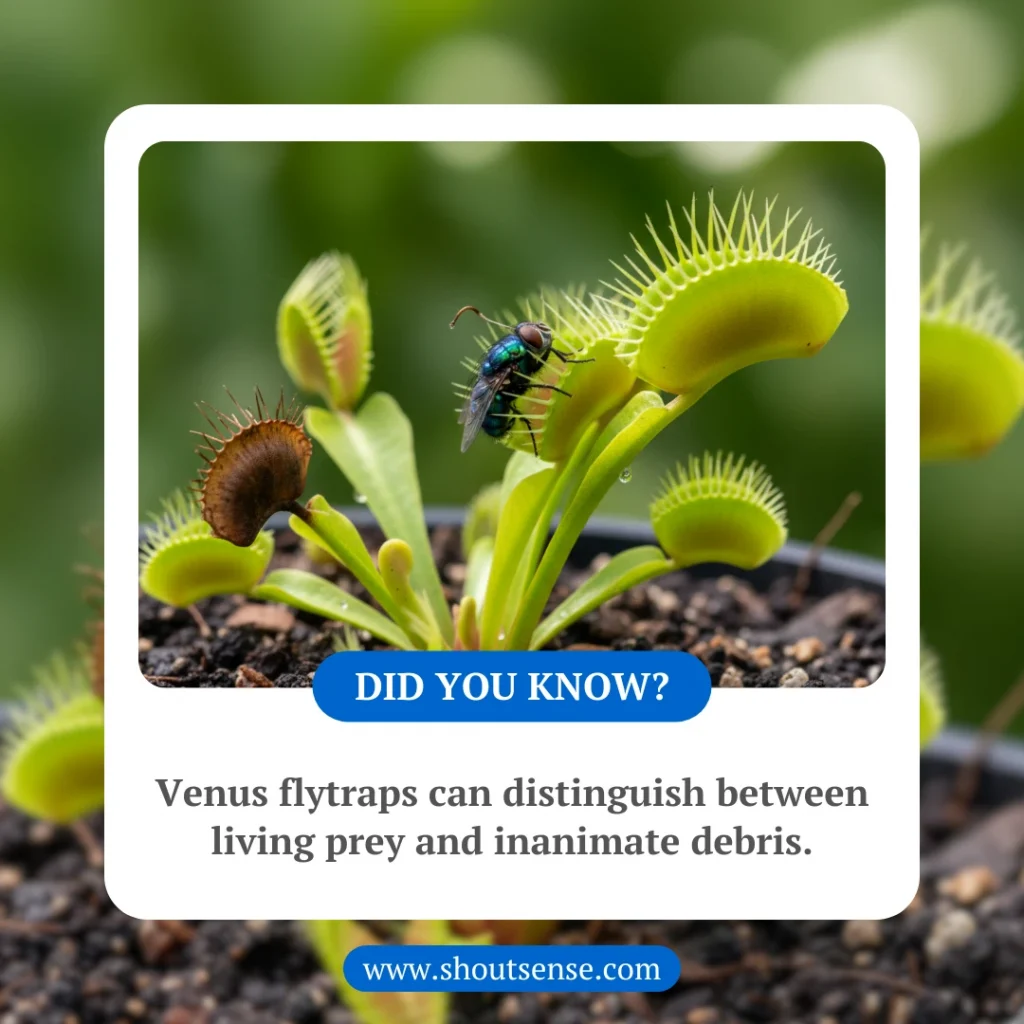
Its triggers are not easily fooled, making the Venus Flytrap a highly evolved hunter that can expertly distinguish between living prey and inanimate debris.
Each trap of the Venus flytrap can be used a few times.
So, when a false signal triggers their sensitive hair, they might end up losing all their traps and die.
As stated in the BBC News, these plants used a counting method to control and prevent unnecessary closures.
It takes 2 touches within 20 seconds before these plants move their traps and catch their prey.
These two mechanical stimuli, within 20 seconds, allow them to distinguish living prey from inanimate debris, such as a raindrop or a speck of dust.
It is a silent, patient predator, waiting for the moment when life struggles against it.
4. The Venus flytrap plant can “learn” a form of simple memory.
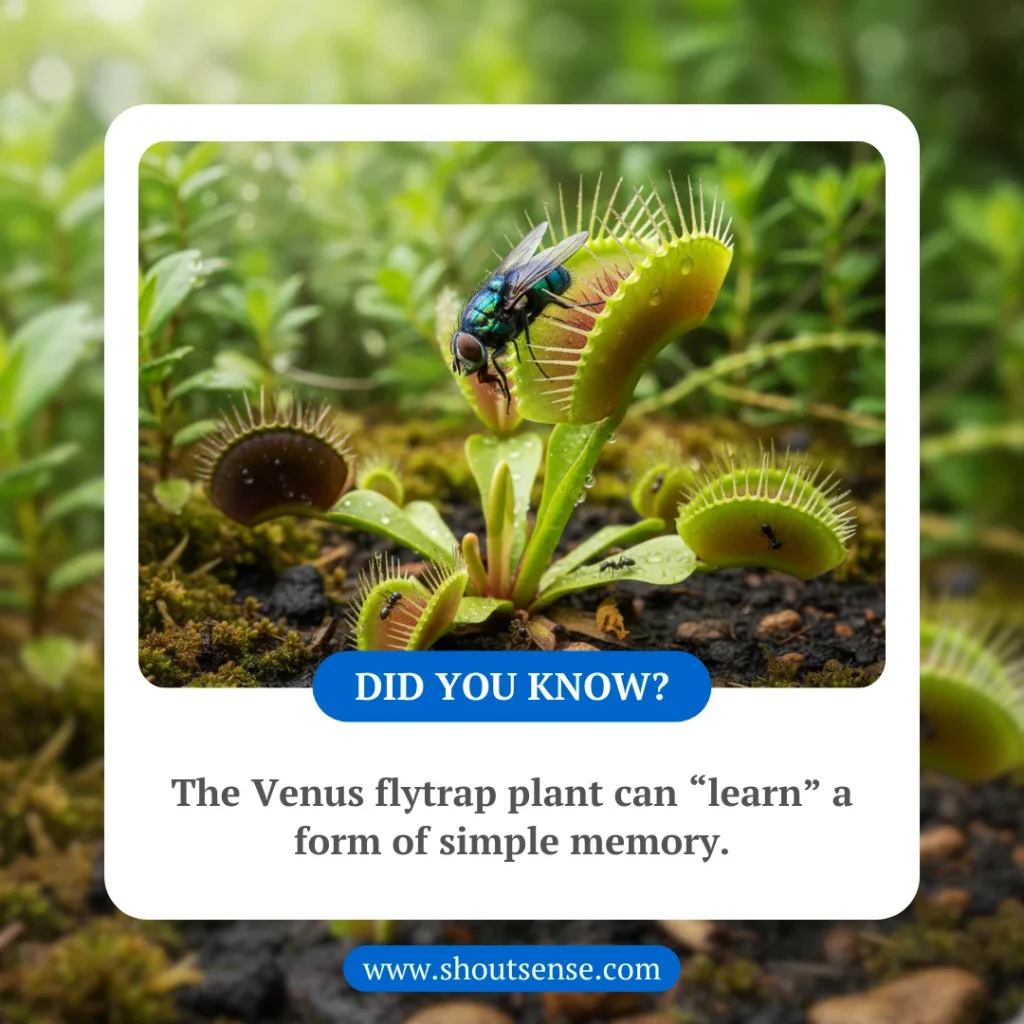
Its surprising intelligence allows the Venus Flytrap to retain information about its environment, possessing a stunning biological form of learning.
One terrifying intelligence of the Venus Flytraps is that they create a pattern against their prey.
To conserve energy against false signals and unwanted closures, these plants create a simple memory pattern.
This pattern is known as 2 touches within 20 seconds.
This means that if their trigger hairs sense a single touch, they will absolutely ignore it.
However, when more touches repeat within a span of 20 seconds, their trap will move or close quickly in as little as 100 milliseconds, allowing them to capture their prey like a vacuum.
Hence, they build their own pattern not just to save energy, but to ensure that every closure they make grants a price of prey.
This is no random act—it is an energy-efficient response.
In its quiet way, the Venus flytrap exhibits adaptive behavior, patience, and an efficient use of energy.
5. The Venus flytraps mimic food smell, attracting unsuspecting insects.
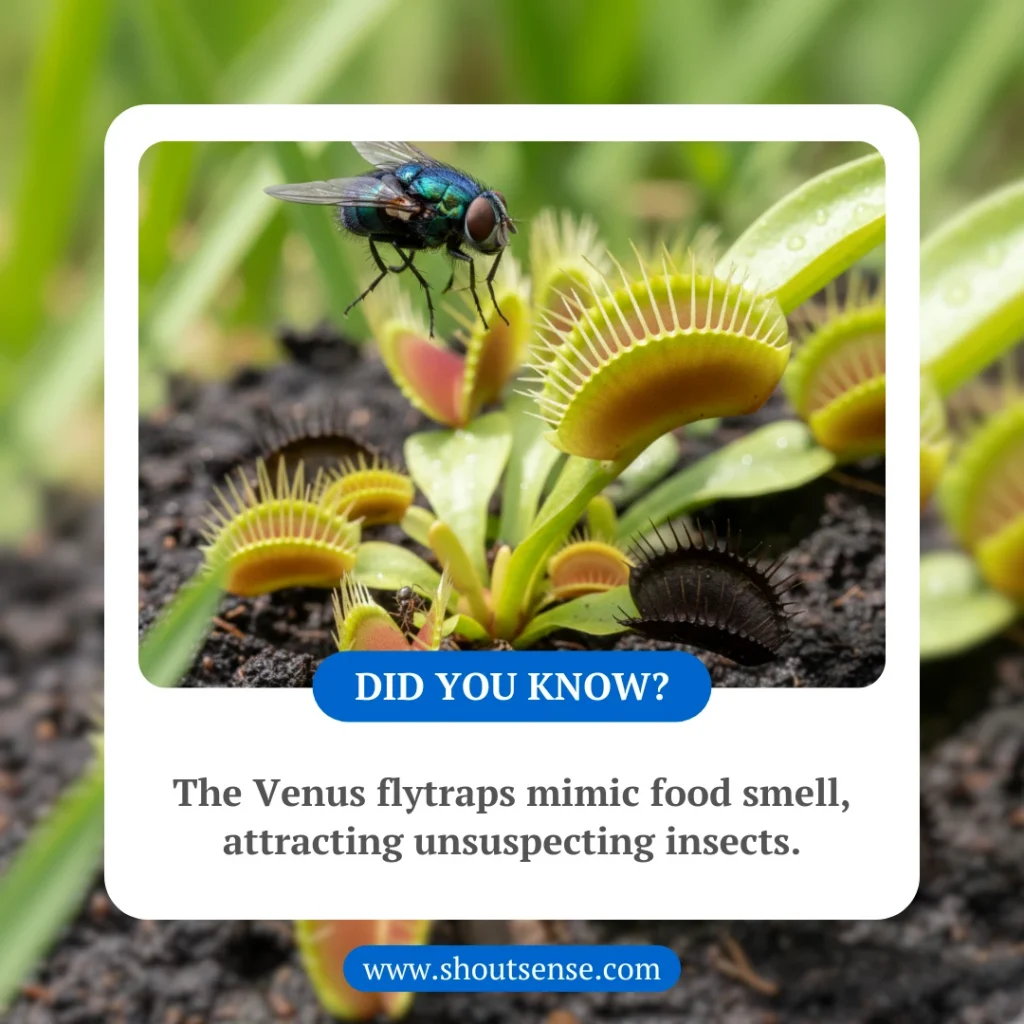
The carnivorous plant hunts with cunning, employing a sweet and irresistible fragrant deception to lure its helpless prey to doom.
These Venus Flytrap plants employ various strategies to entice and attract unsuspecting insects to become their prey.
For example, they use their bright red traps, which look like raw meat, to lure insects such as flies, ants, and other bugs.
Moreover, they release a volatile blend that smells of a bouquet of fruits and plant flowers to attract and lure passing by insects.
Once they touch the tiny hairs, the trap snaps shut, and dinner is served. It’s like the plant has its own natural “bug buffet” sign, without saying a word!
Wrap-Up
The Venus flytrap may be small, but it’s a master of strategy and survival, full of wonder at every turn.
Its precise hunting skills and clever adaptations show just how incredible nature can be.
If you enjoyed these fun facts about Venus flytraps and want to discover even more surprising plant secrets, drop a comment below and let us know!
Related article, visit here.