In the green world, countless wonders hide in every corner.
Some are quiet, some are fierce, yet all share a single purpose—to survive.
Among them lurks the Venus flytrap, a tiny predator dwelling in the damp, shadowy wetlands of North and South Carolina.
At first glance, it seems like any ordinary plant, but beneath its emerald leaves lies a deadly secret for unsuspecting insects.
In this article, we reveal some of the most shocking and mysterious fun facts about the Venus flytrap, uncovering the extraordinary traits of this tiny predator.
The Carnivorous Plant That Traps and Digests Its Prey
1. The Venus flytrap is a carnivorous plant.
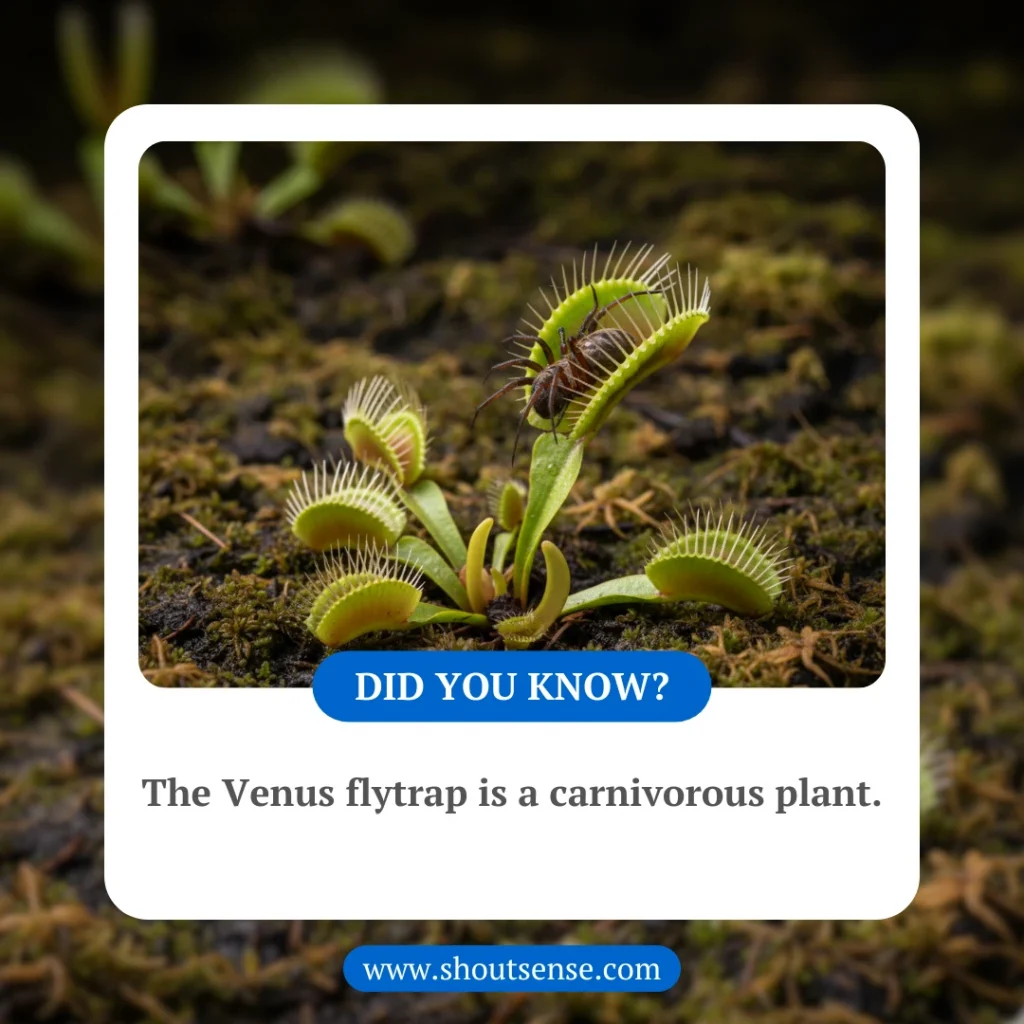
Beneath its green leaves lies a deadly secret.
According to San Diego Zoo Animals & Plants, these plants hunt insects and spiders to obtain nutrients, such as nitrogen, that they cannot reap from the native soil because it lacks essential nutrients.
Venus flytraps use their leaves to lure unsuspecting insects.
Tiny trigger hairs line each leaf, and when touched, they send a signal that makes the trap snap shut in less than a second, capturing its prey with lightning speed.
This unusual diet allows it to survive where other plants struggle.
It is nature’s small but relentless predator.
2. It grows only in the mysterious wetlands of North and South Carolina.
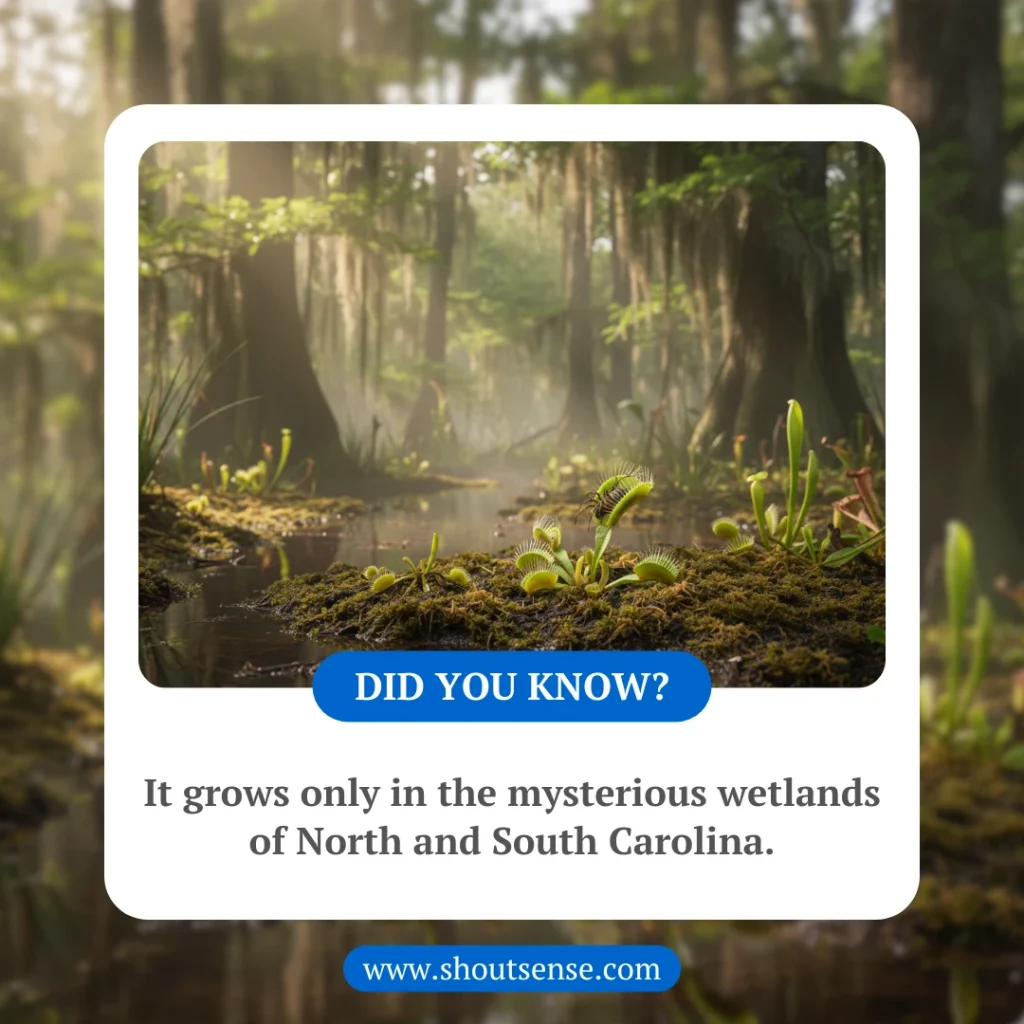
Trapped by fate and geography, this peculiar organism accepts no other home.
The Venus flytrap grows only in the isolated swamps of North and South Carolina.
The soil there lacks essential nutrients, yet it is an ideal habitat for these predatory plants to thrive and survive.
Sunshine and water combine with its deadly traps to sustain life.
Few humans ever see it in its natural habitat.
Its rarity and unique adaptations make the Venus flytrap one of nature’s most enchanting botanical treasures.
3. Its trap can snap shut faster than the blink of an eye.
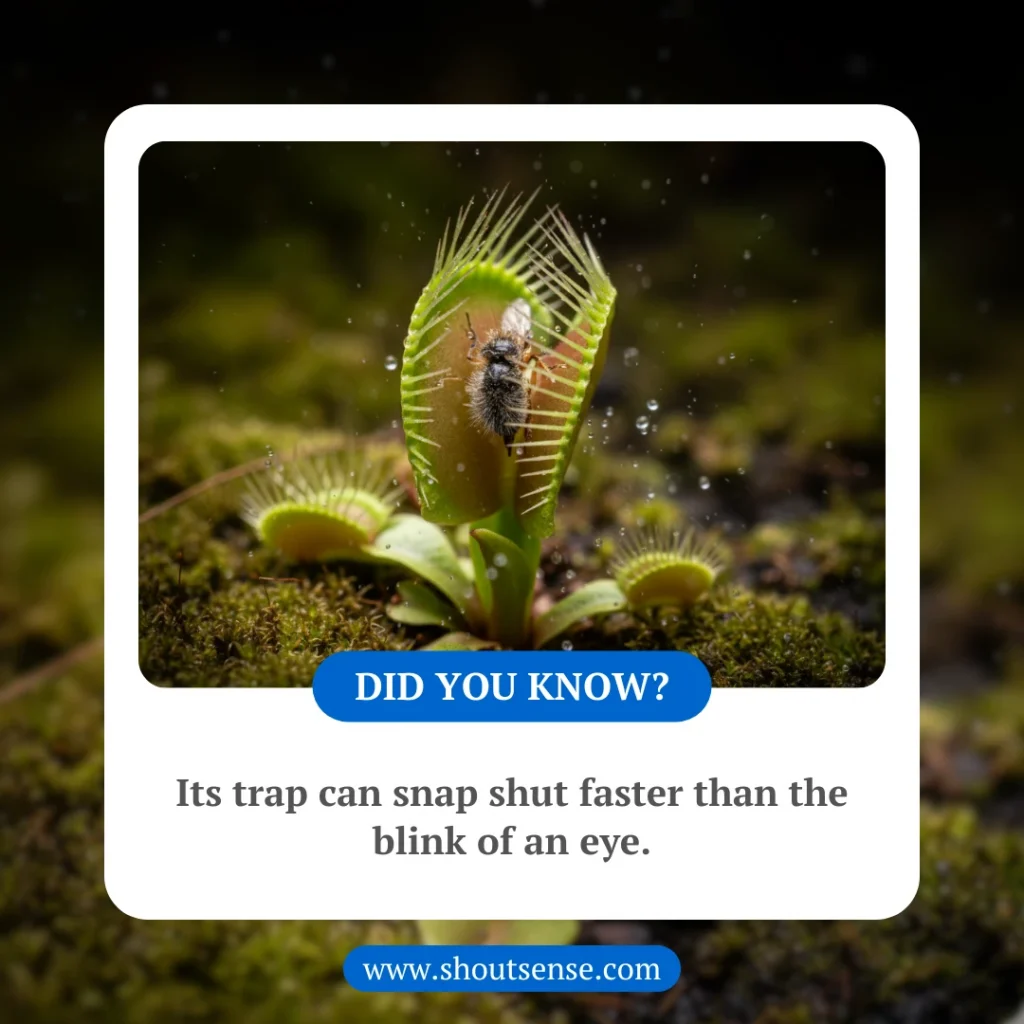
A marvel of biological speed, its living trap can snap shut on unsuspecting prey faster than the blink of an eye.
This plant is famous for one of the fastest movements in the plant kingdom, according to Live Science.
When the trigger hairs are touched, the Venus flytrap’s trap snaps shut in about 1/10th of a second, which is equivalent to 100 milliseconds.
This lightning-fast strike ensures that no unlucky insect escapes.
The rapid closure is powered by sudden changes in water pressure within the leaf cells.
Nature’s engineering has created a predator that is both precise and deadly
4. Tiny sensitive hairs trigger its deadly jaws.
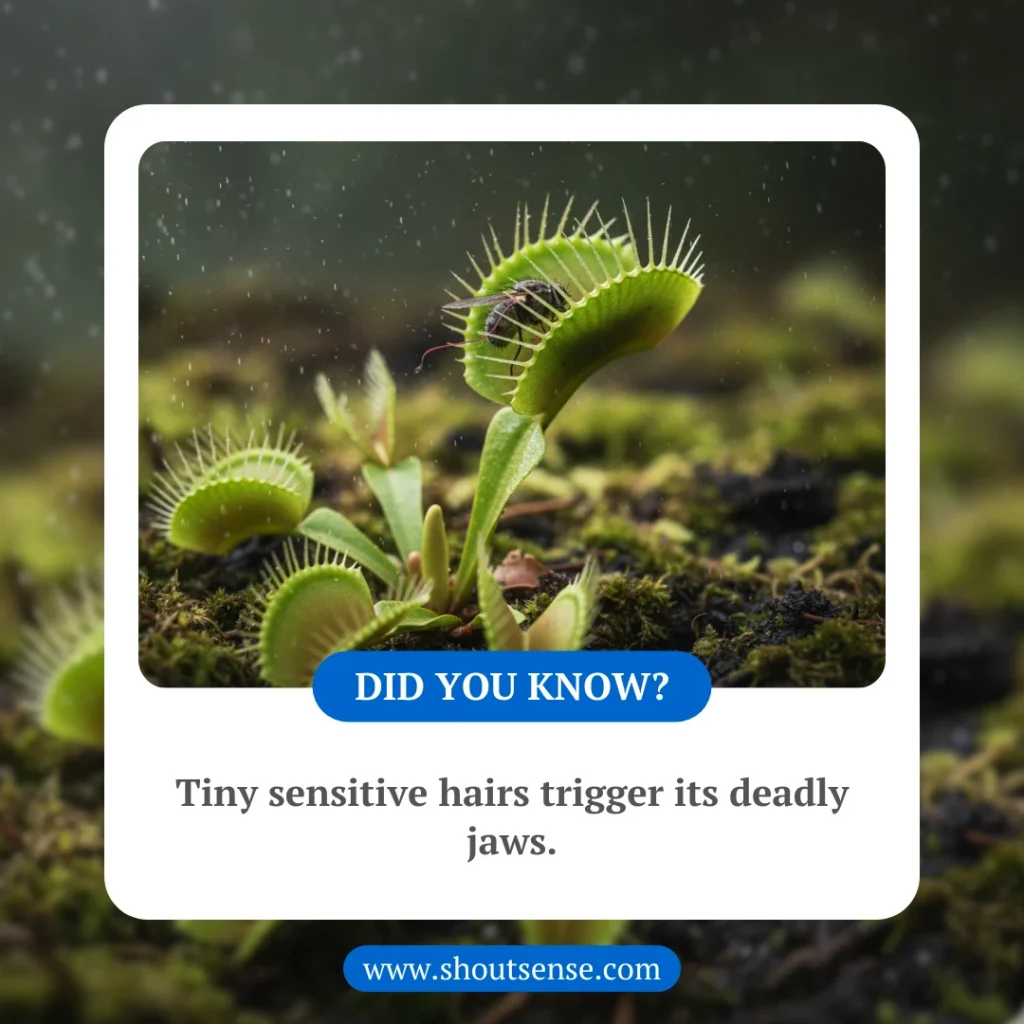
The trap waits in silent patience, requiring only a whisper of movement against its tiny, sensitive hairs to trigger its lethal jaws.
The Venus Flytraps use their tiny, sensitive hairs to trigger their deadly traps.
Each trap is lined with delicate trigger hairs that, once touched, activate the snap.
However, to avoid accidental closure or false alarms, such as raindrops, their traps usually require at least two touches on the trigger hairs within 20 seconds to snap shut and trap prey.
The hairs are tuned perfectly to detect real prey.
In the hidden world of the flytrap, even the smallest misstep can be fatal.
5. Once captured, prey is slowly digested over several days.
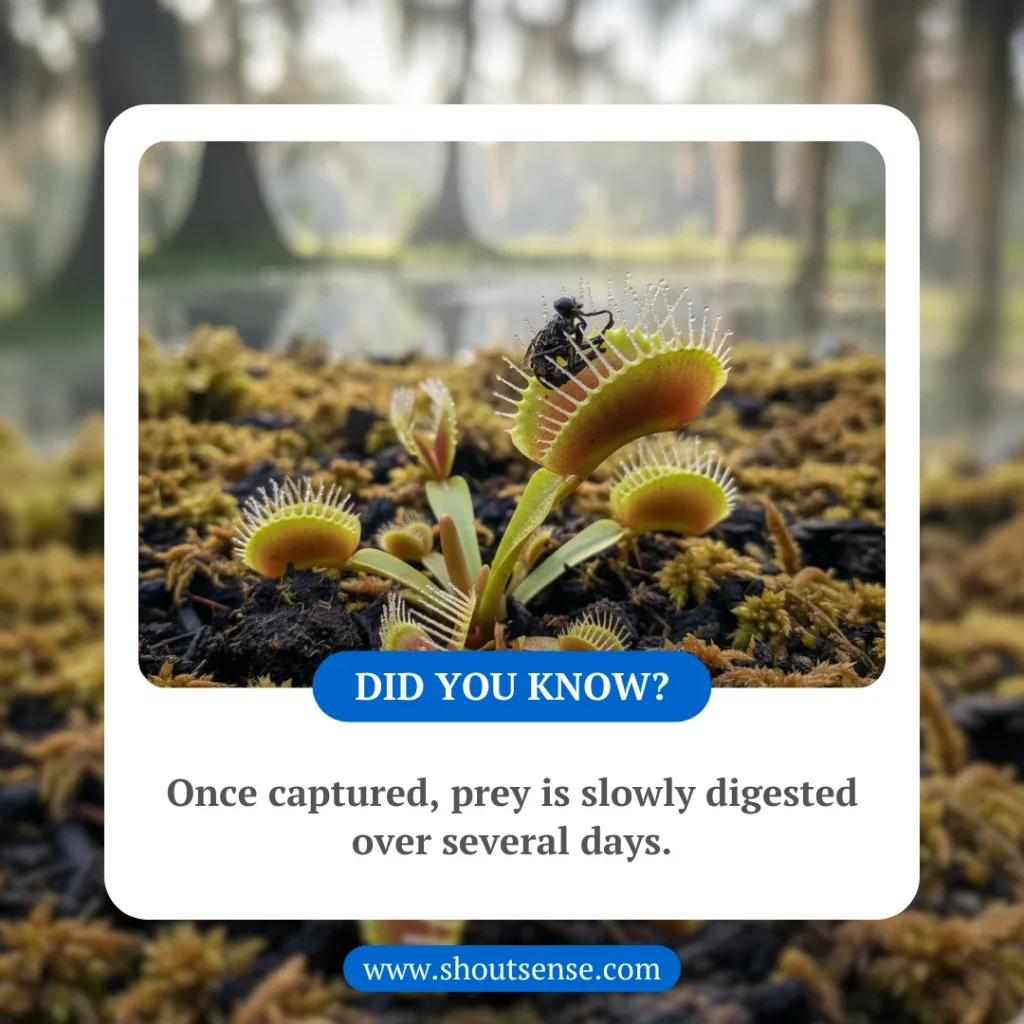
Trapped and sealed by a living hinge, the fatal meal is a lingering horror as the unfortunate prey is slowly digested over several days.
Once the trap snaps shut, the Venus flytrap begins its slow, secret feast.
Their powerful digestive juices break down the trapped insect over several days, usually 5 to 12 days.
Every nutrient is carefully absorbed, which helps them survive in poor, harsh soil.
After digestion is complete, the trap reopens, ready to strike again.
They need to be patient, relentless, and hidden in the shadows again.
This tiny predator waits for its next unsuspecting meal.
Wrap-up
The Venus flytrap is far more than a plant.
It is a tiny predator, a survivor, and one of nature’s most mysterious creations.
From its deadly jaws to its sensitive hairs, every part tells a story of survival and intrigue.
Which of these shocking fun facts about Venus flytraps amazed you the most?
Or is there something else about this incredible predator you’d love to discover?
Drop a comment below and share your thoughts—we’d love to hear from you!
For a related article, visit here.