The Venus flytrap is an amazing little plant that actually hunts for its food.
Its snapping traps, glowing surfaces, and clever survival tricks make it one of nature’s extraordinary creations.
In this article, we’re sharing 5 fun facts about the Venus flytrap that show just how clever, unique, and fascinating this little plant really is.
5 Fun Facts About the Venus Flytrap
1. The Venus Flytrap glows when exposed to ultraviolet (UV) light, revealing a hidden, striking feature.
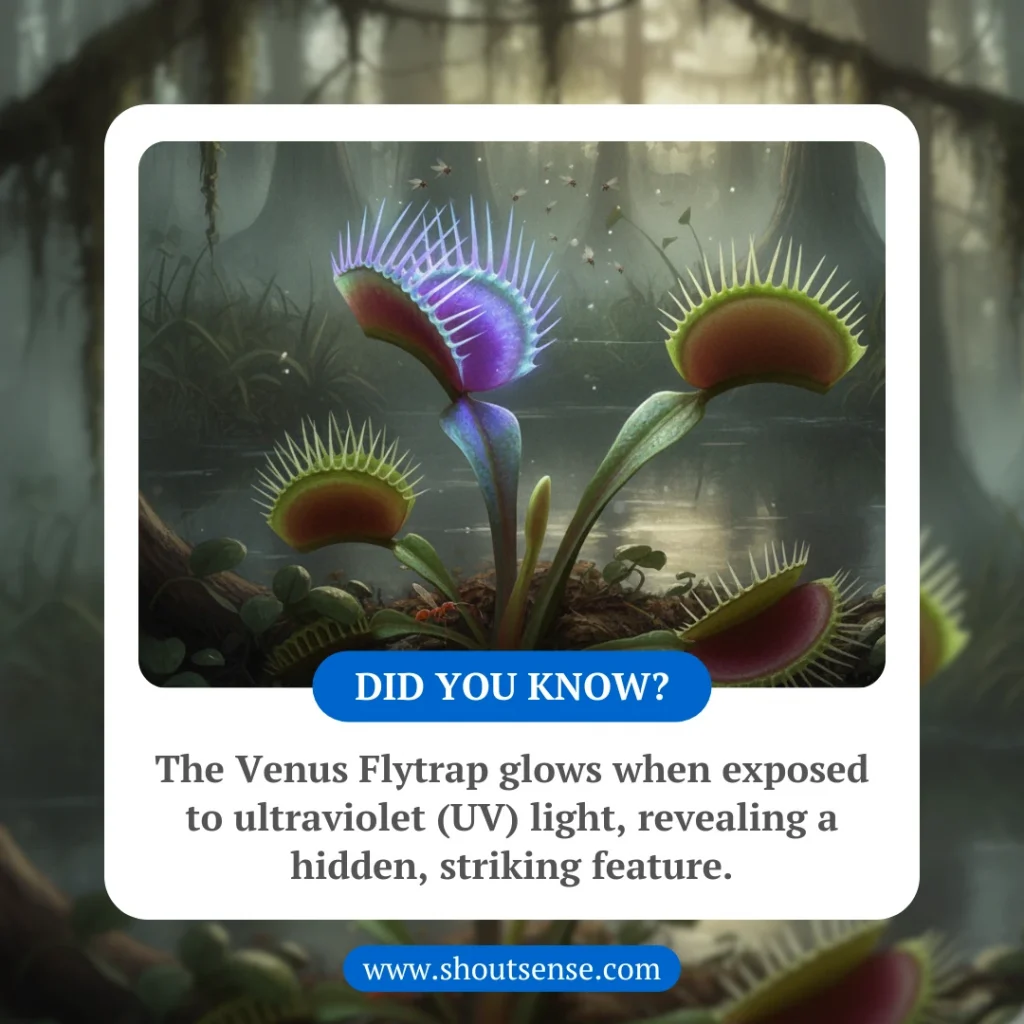
Not just a predator, the Venus Flytrap hides a silent secret.
Its deadly mouth is designed to glow brilliantly under UV light like a lure in the darkness.
When the Venus flytrap is exposed to ultraviolet light in lab tests, the inner surfaces of its trap give off a faint blue glow.
This glow, known as fluorescence, is invisible to humans but highly visible to many insects.
To insects, this faint blue light looks shiny and attractive, making it easier for the plant to trick them.
Scientists tested this by blocking the glow, and they discovered that the Venus flytrap caught far fewer insects.
Hence, this shows that the glow isn’t just a random reaction—it’s part of the flytrap’s clever hunting strategy.
2. This plant can survive wildfires, showing its remarkable resilience to extreme conditions.
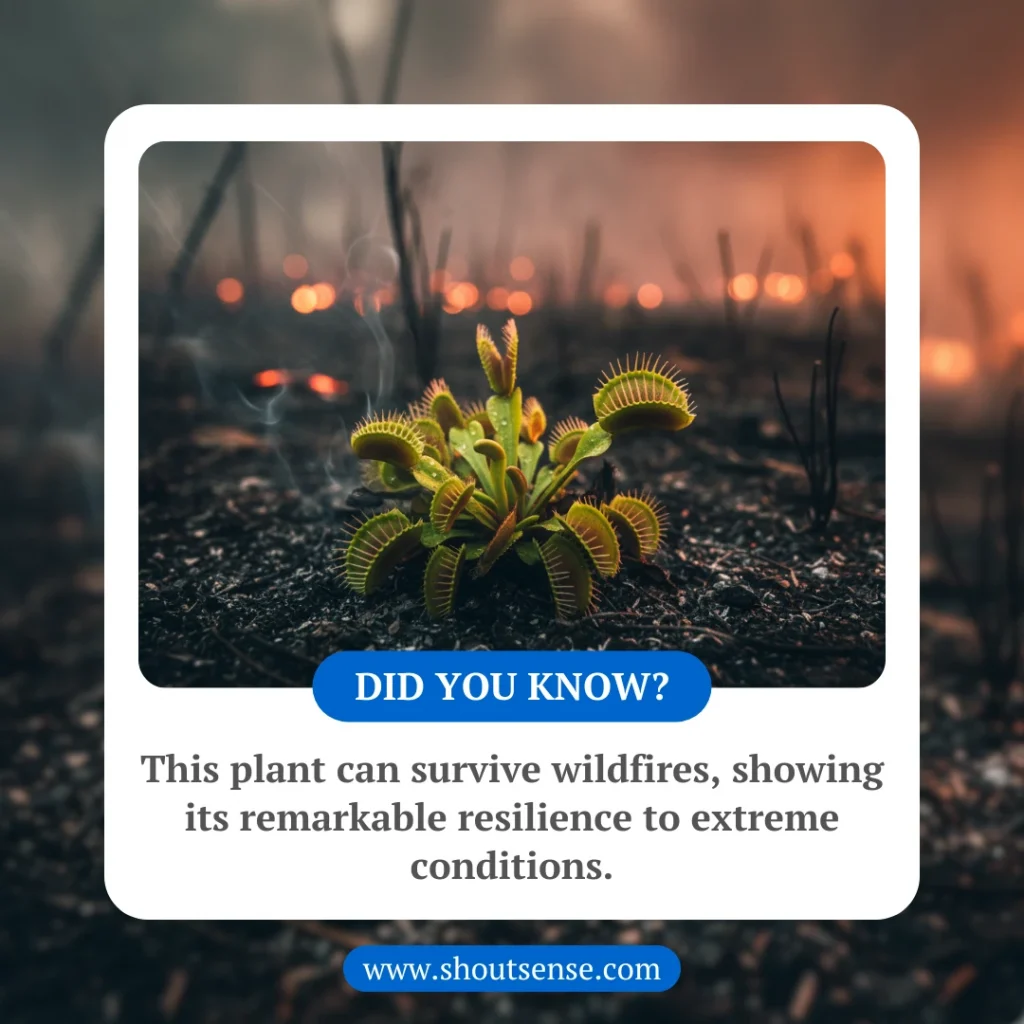
This remarkable plant is a master of resilience, actually thriving in the aftermath of a devastating wildfire that wipes out its competition.
It’s common for plants to die, especially in a wildfire.
However, unlike most plants, the Venus flytrap thrives after occasional wildfires.
The traps of these plants are not only used for capturing prey, but they also serve as protection against wildfire.
Their sensitive trigger hairs are composed of heat sensors that react to heat waves during wildfires.
This doesn’t mean that the Venus flytraps are immune to wildfire.
Their heat sensors only activate when the temperature is approximately 37 to 55 degrees Celsius.
When the temperature of the environment exceeds 37 degrees Celsius, their trap marks a warning signal.
If the heat reaches a critical temperature of 55 degrees Celsius, their traps snap shut as part of their survival mechanism.
However, the plant cannot survive if the soil temperature around its roots reaches 43 degrees Celsius, as this heat is lethal to its underground rhizome.
Even if the above-ground traps are damaged, the underground rhizome stores energy and survives.
3. It can produce flowers, but doing so comes with significant risks.
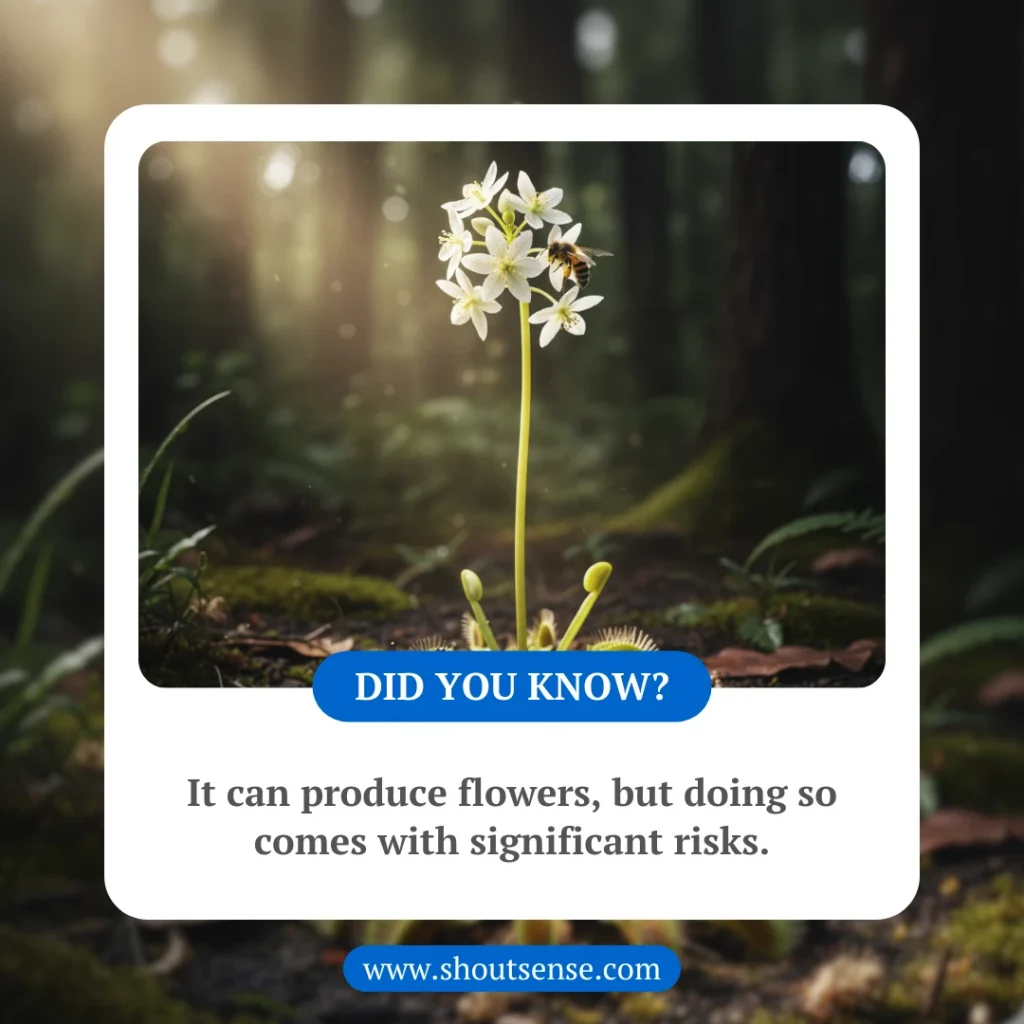
The urge to reproduce is a life-or-death decision as the plant must gamble its entire existence to produce a flower.
The Venus flytrap is a perennial plant that blooms annually, usually from May to June.
However, producing flowers uses a lot of energy, especially in the Venus flytrap, as flowering is too risky for them.
Even during their blooming months, if a Venus flytrap doesn’t have enough energy from sunlight and insects, it will skip flowering and instead store its energy to survive rather than produce flowers.
On the other hand, if the plants have sufficient energy and reach maturity, they bloom, and their flowers are up to 8 to 12 inches tall.
What makes their blooming risky is that when they bloom, they use more energy than normal.
When this happens, it will outbalance the nutrients for producing new traps, and they may become vulnerable to other insects or die.
Flowering is beautiful, but also one of the most dangerous moments in the flytrap’s life.
4. They’re part of an evolving tech inspiration.
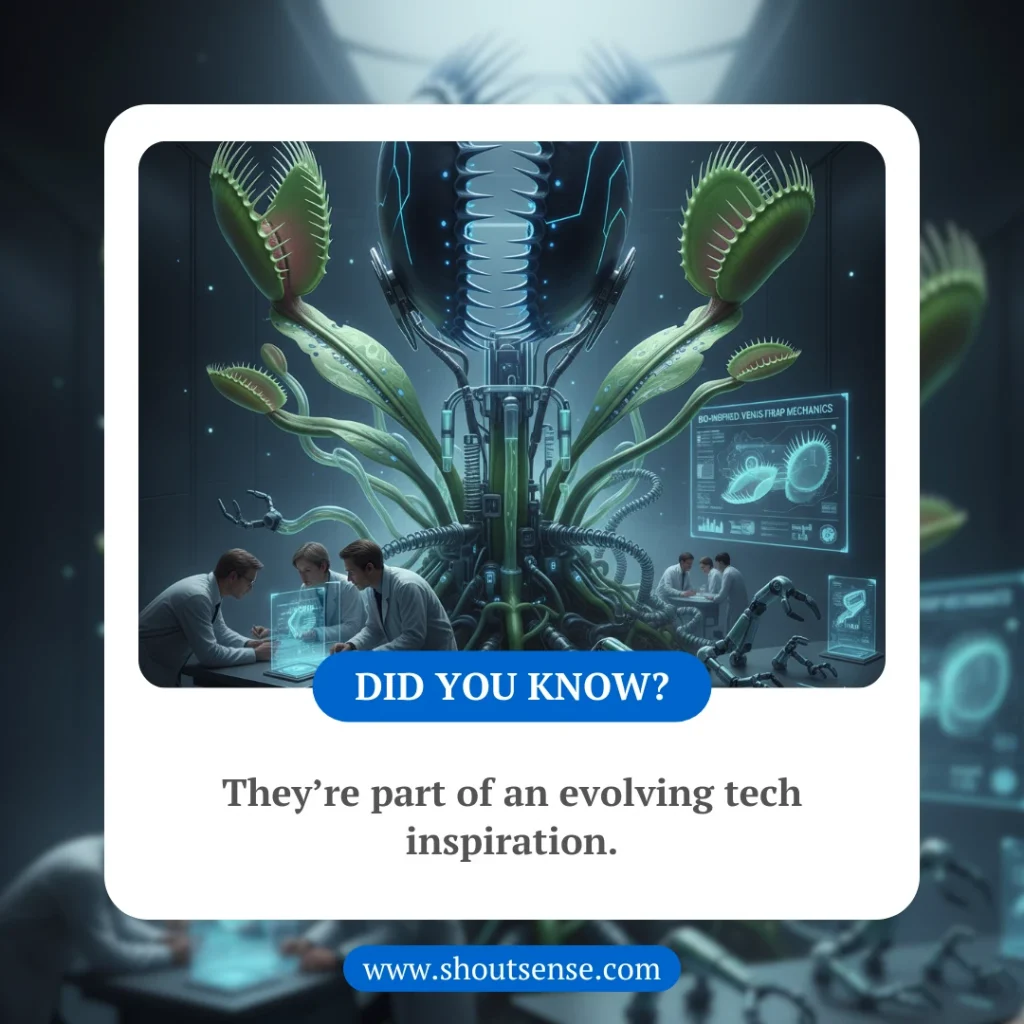
The Venus Flytrap is more than a botanical wonder, serving as a cutting-edge biological blueprint for the future of robotic technology.
The quick snap of a Venus flytrap isn’t just extraordinary—it has also caught the attention of scientists and engineers.
The study found that Venus flytraps reopen their traps in different ways depending on size: small traps move slowly and evenly, while large, slender traps use a quick “snap-through” motion.
Although Venus flytraps can snap shut in as little as 100 milliseconds, reopening their traps takes several hours and can sometimes cause large traps to break, which may limit their size.
These discoveries show just how cleverly the traps work and even inspire engineers to create new technology, like soft robots, by copying the flytrap’s movements.
5. These plants are selective predators, carefully choosing which insects to capture.
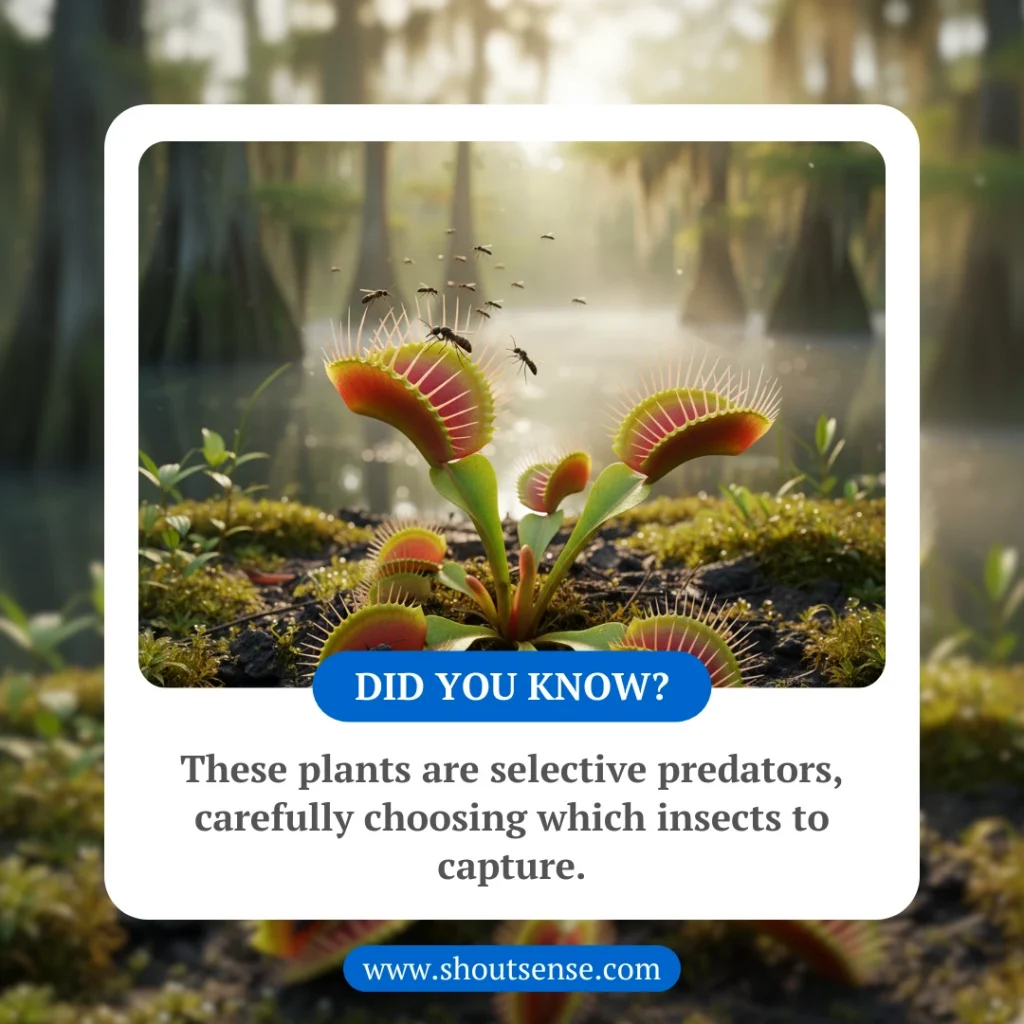
The Venus Flytrap is no generalist hunter; it possesses the uncanny ability to filter its meals based on specific biological needs.
Although known as insect predators, the Venus flytraps become selective, especially when it comes to capturing prey.
Their traps are designed to catch small insects, such as flies, ants, and occasionally spiders.
They focus on capturing small animals because this reduces the risk of damaging their traps.
Large insects can be too strong or heavy, causing traps to break or allowing the prey to escape, which wastes their energy.
Moreover, the trap’s closing mechanism and digestive enzymes are optimized for manageable prey sizes, ensuring maximum nutrient gain with minimal effort.
By focusing on small insects, the Venus flytrap survives in nutrient-poor soils while avoiding costly “mistakes.”
Wrap-Up
The Venus flytrap is full of surprises, from glowing traps to clever hunting strategies.
Even a small plant can show amazing ways to survive and adapt.
The incredible adaptations of these tiny predators show just how fascinating nature truly is.
If you enjoyed these facts—or if you’re curious about more amazing plants—leave a comment and let us know.
We’d love to hear which Venus flytrap fact surprised you the most!
Related article, visit here.