In the hidden corners of the wild, some plants don’t just survive—they hunt.
They lure their victims with sweetness, only to seal their fate in a pool of silent death.
Mysterious, strange, and beautiful, pitcher plants are nature’s living traps.
In this blog, we’ll explore the secrets of pitcher plants and the eerie tricks they use to capture their prey.
Nature’s Insect-Luring Machines
1. Pitcher plants trick insects with sweet nectar that works like natural candy bait.
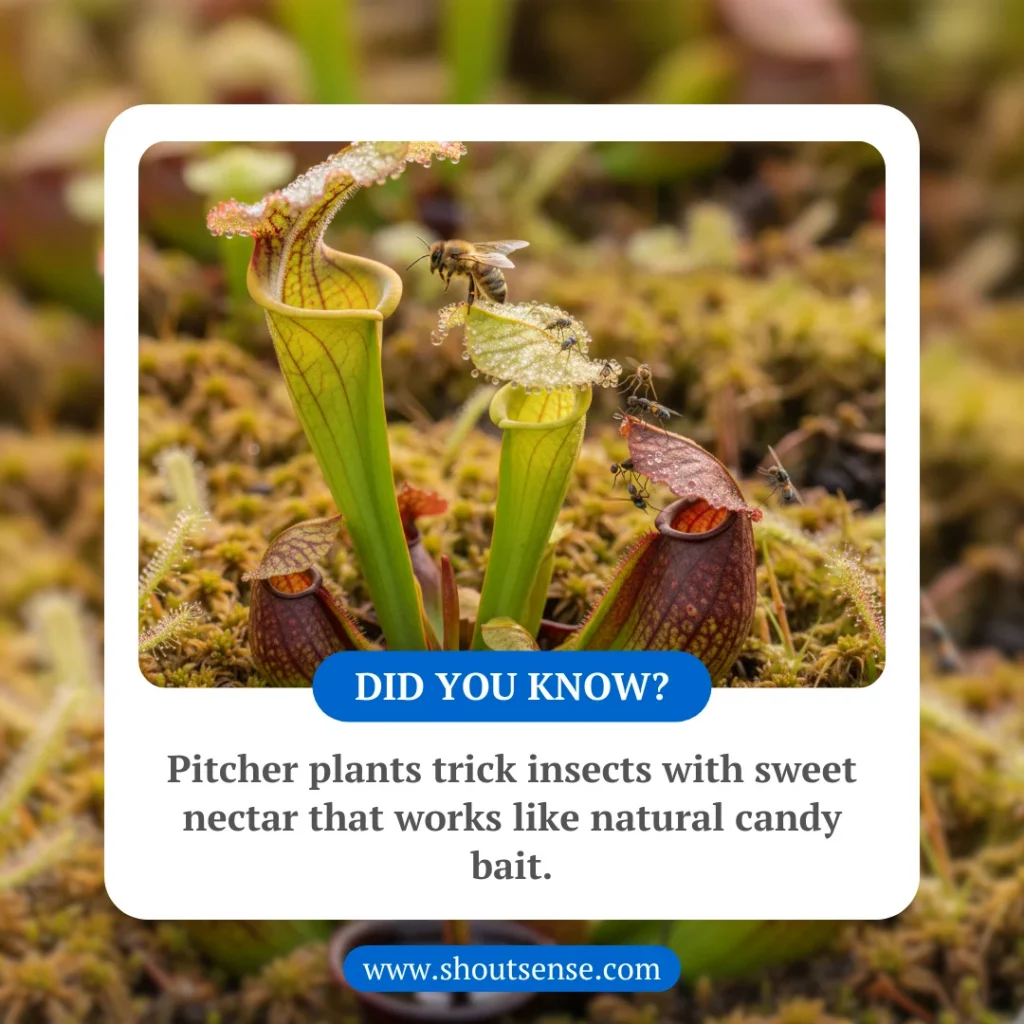
Pitcher plants are best known for their unique way of catching prey.
They use sweet-smelling nectar as a bait to lure insects into their trap.
Once the insect is inside, the slippery walls and downward-pointing hairs make their escape almost impossible.
The insects would eventually fall into a liquid at the very bottom, where digestive enzymes break them down into nutrients for the plant.
Recent studies suggest that pitcher plants may adjust their scents to attract different types of prey.
For example, some species that target bees may release more floral scent, while others that focus on fruit flies release fruity scents.
This means that the plants are adapting their fragrance depending on the prey they want to catch.
Although pitcher plants are known for their distinct shapes and colors, their scent somehow didn’t get much attention.
A study provides evidence that different Sarracenia species create unique scents designed to attract specific groups of prey.
2. Pitcher plant walls are extremely smooth.
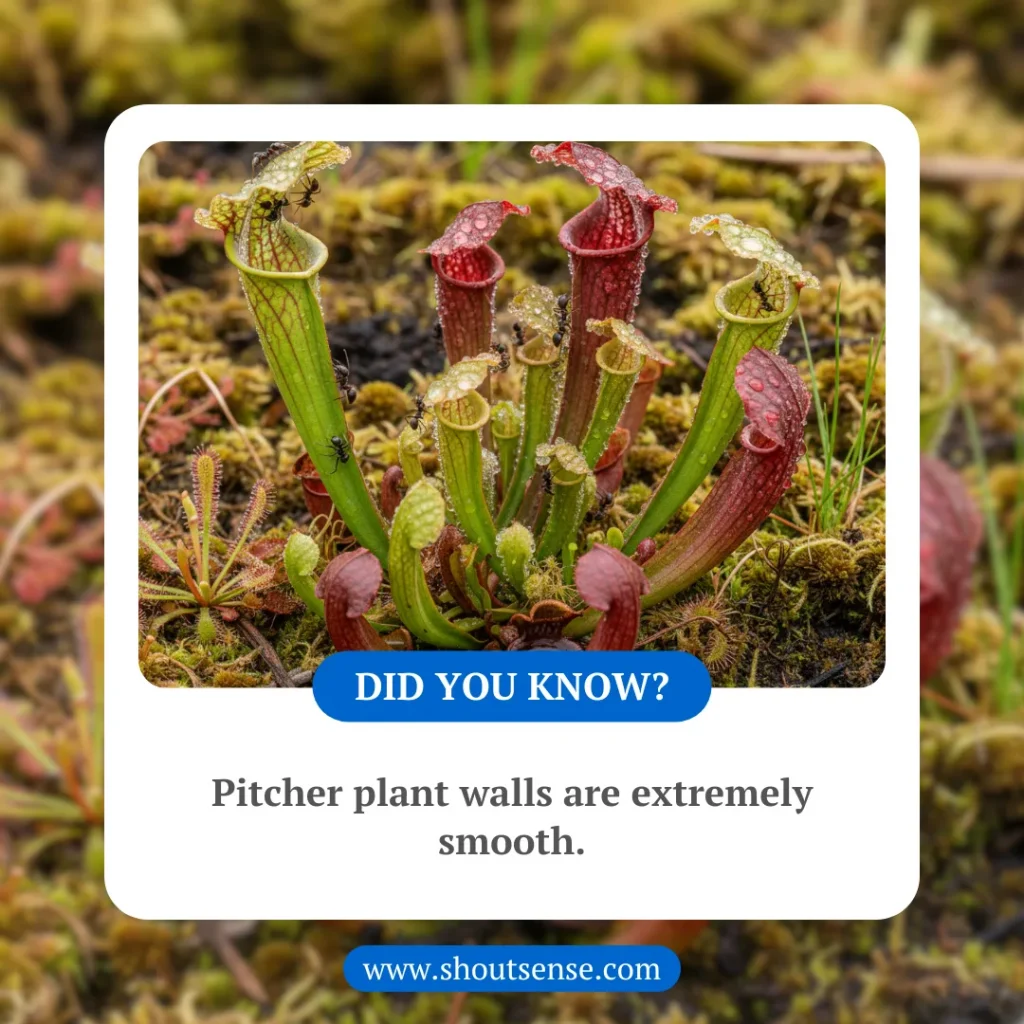
Pitcher plant walls are extremely smooth.
What makes them smooth is that when water or nectar drops on them, it creates a thin and slippery layer that makes their surface smoother, making them effective insect traps.
But research shows that their efficiency depends on moisture.
When dry, the slippery surface loses traction, allowing some ants to escape.
Once wet, a thin film of water creates an extremely slick surface, causing insects to lose their footing and slide into the pitcher.
A pitcher plant can dry out for three reasons.
First, a lack of rain prevents it from maintaining its slippery layer. Second, low humidity reduces moisture in the air. Lastly, little or no nectar is available, which normally helps keep it wet.
3. The liquid inside works like a tiny stomach with digestive juices.
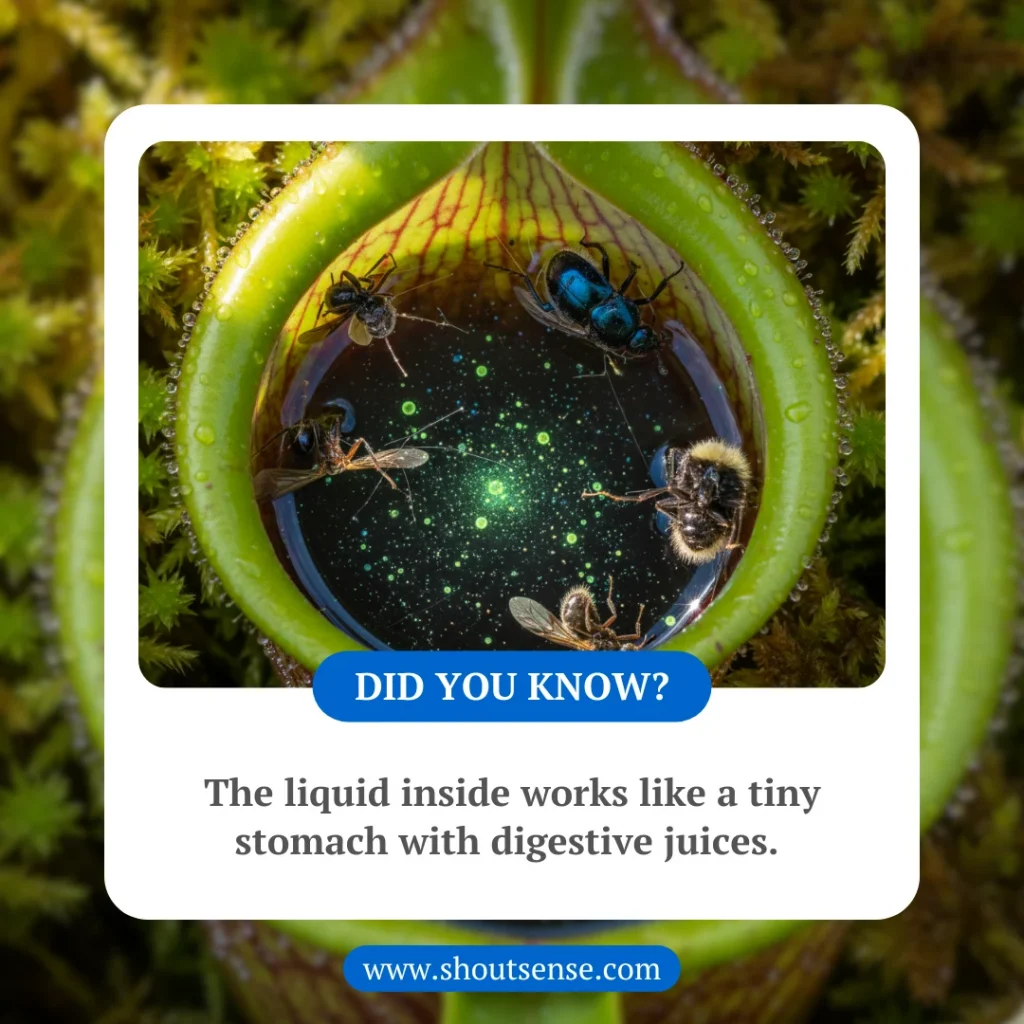
The fluid inside pitcher plants acts like a miniature human stomach, containing digestive enzymes produced by the plant that break down prey into usable nutrients for the plant.
These enzymes include proteases for protein digestion, chitinases for breaking down insect exoskeletons, and other enzymes such as esterases and phosphatases.
Altogether, they’re a complete digestive system for the plant. In addition to plant-derived enzymes, pitcher fluids also host rich microbial communities.
4. Some species glow under ultraviolet light at night, guiding insects like runway lights.
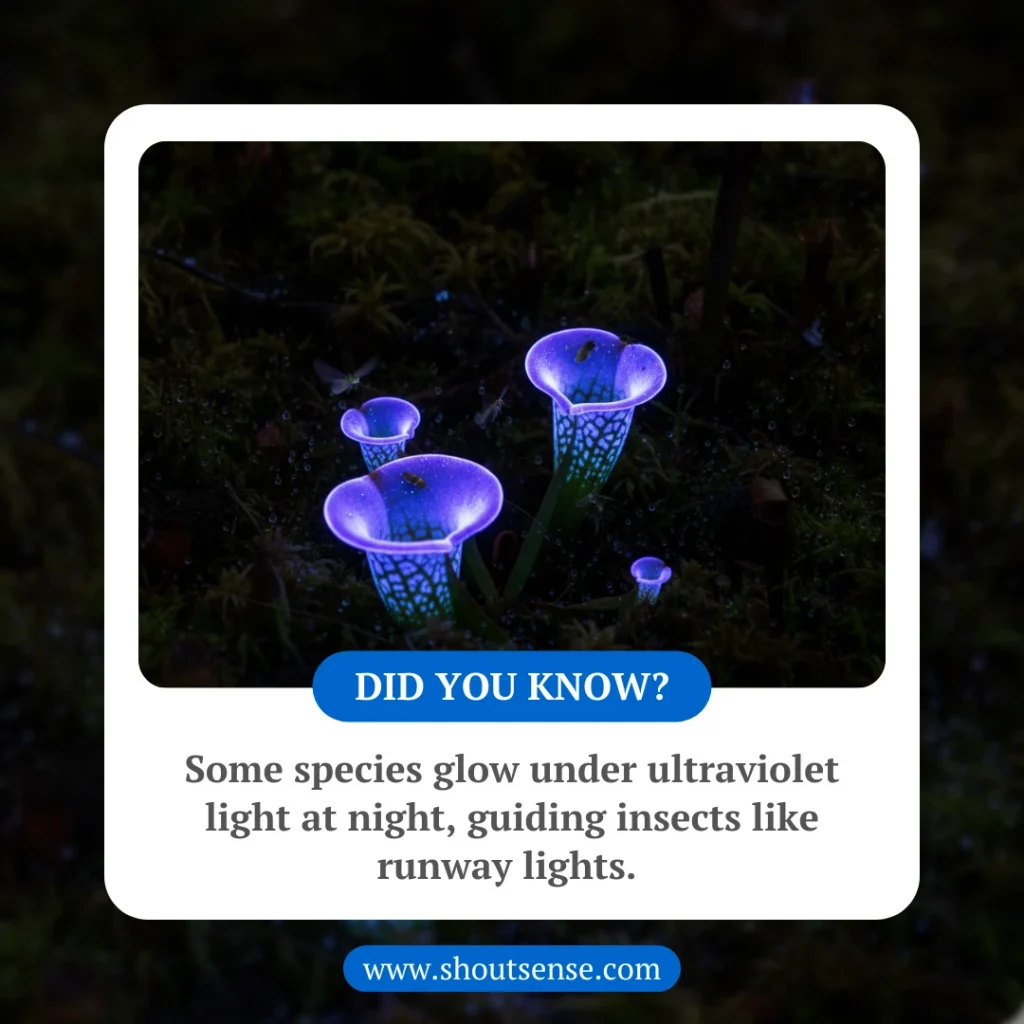
Some pitcher plants, such as Nepenthes and Sarracenia, show UV-induced biofluorescence.
This creates glowing blue rings along their rims that help attract insects.
This is caused by metabolic compounds that absorb ultraviolet (UV) light and re-emit it as visible light, something many insects can see, even though humans cannot.
These glowing patterns are strongest in young traps and fade as the traps age and die.
5. The giant Nepenthes rajah can grow pitchers big enough to trap rats and lizards.
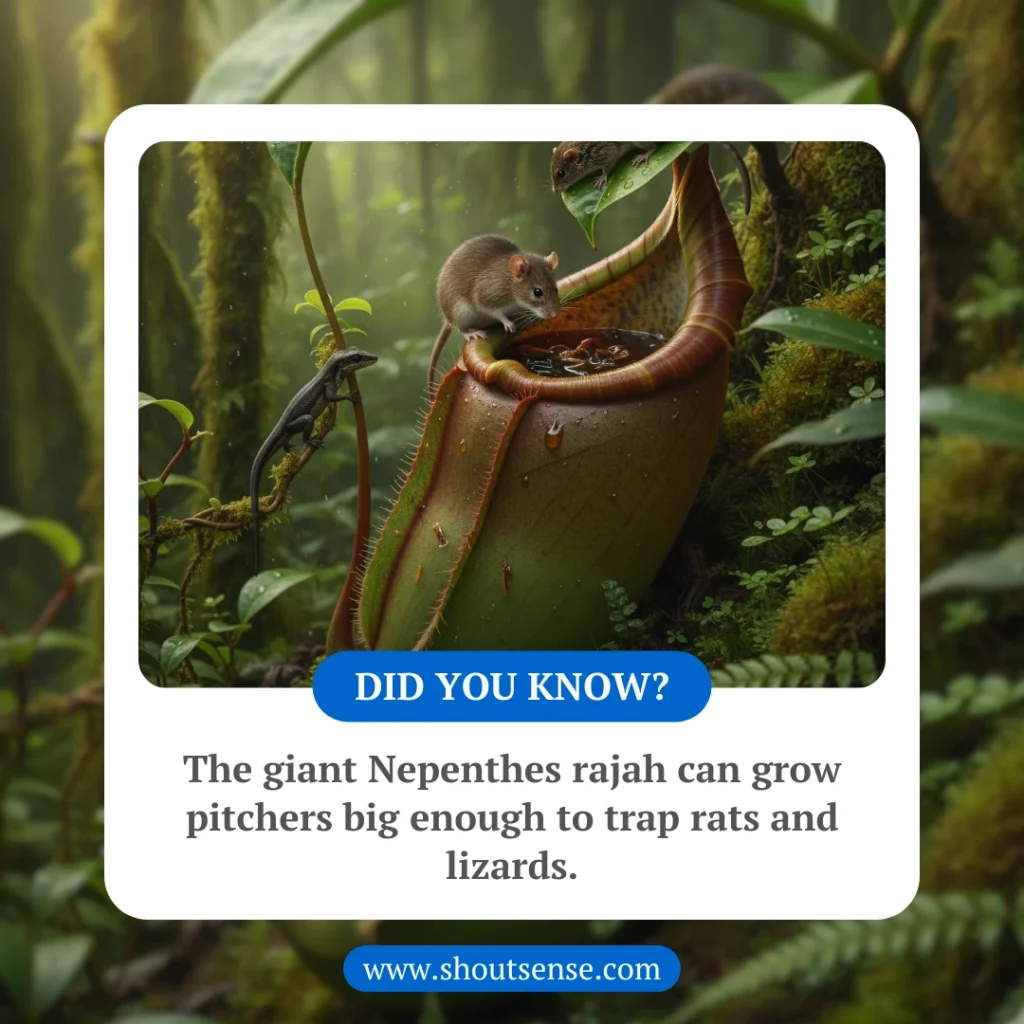
The largest carnivorous plant in the world is Nepenthes rajah, a giant pitcher plant native to Borneo.
Its urn-shaped traps can grow up to 41 centimeters tall and hold as much as 3.5 liters of liquid.
While its main food source is insects, it is also capable of trapping small vertebrates such as lizards and rats.
Moreover, it benefits from a form of mutualism by collecting the droppings of small mammals, which supply extra nutrients.
Wrap-Up
Every curve of a pitcher plant hides a story of survival, every glow and scent a deadly invitation.
They are proof that nature can be as cruel as it is captivating, blurring the line between beauty and danger.
A silent predator in plain sight, waiting for its next meal.
If you love discovering the dark wonders of nature, this blog is for you. Want to learn more?
Comment below, and let’s dive deeper into the world of carnivorous plants together.
For more random fun facts, visit here.