Want more fun facts? – Visit here
3. Some spiders live inside the pitchers, sharing the trap with the plant.
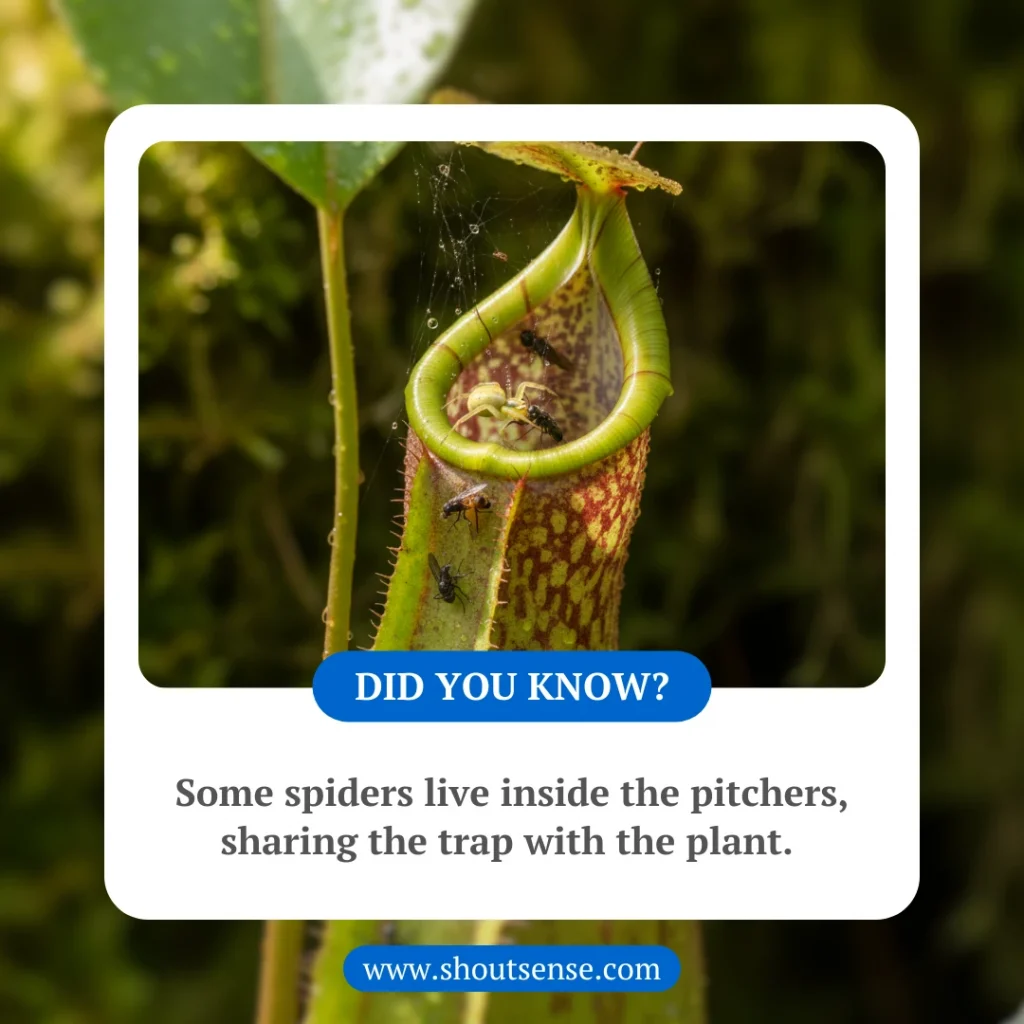
Crab spiders in the Thomisidae family, which includes Misumenops nepenthicola and Thomisus nepenthiphilus, live inside the pitcher plant in Southeast Asia.
This relation shows nutritional mutualism in which both species benefit.
The spiders take advantage of the plant’s nectar to attract insects, then ambush them.
After the plants digest them, some drops of liquid remain inside the pitcher, which give the plant nutrients in return.
This provides the plant with valuable nutrients, particularly nitrogen.
The interesting part is that these spiders have adaptations that allow them to escape the fluid, like spinning silk threads to climb out.
This arrangement makes them both hunters and allies of the pitcher plant.
4. Their waxy surfaces inspired scientists to create anti-stick coatings.
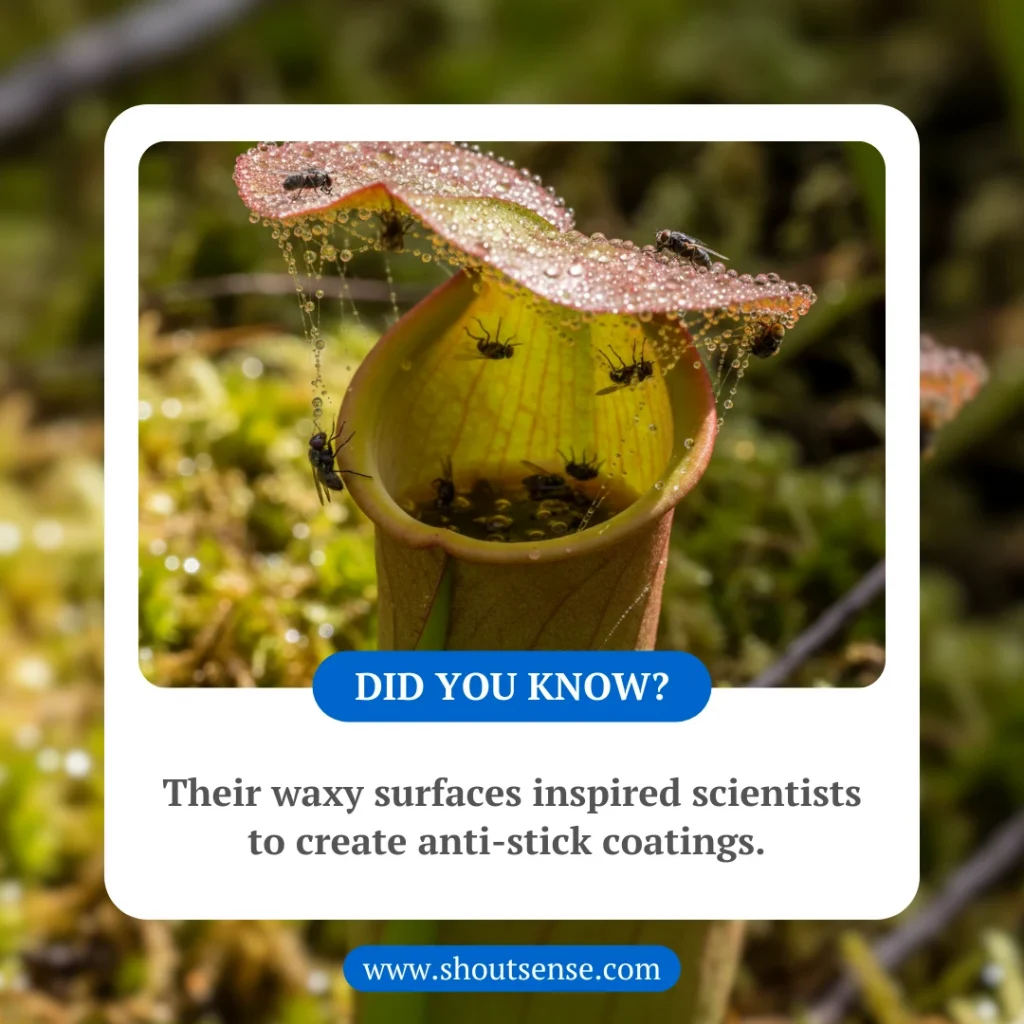
The pitcher’s waxy and slippery inner walls prevent insects from escaping, inspiring scientists to develop Slippery Liquid-Infused Porous Surfaces (SLIPS).
These coatings repel a wide range of liquids and solids.
They are created by infusing a porous solid with a lubricating fluid, resulting in a stable, self-cleaning, and self-healing surface.
Unlike traditional superhydrophobic surfaces, SLIPS can handle fluids with high viscosity, low surface energy, and poor fluidity.
They also show low contact angle lag, strong self-repairing ability, and high-pressure stability.
5. When it rains, some pitchers create drumming sounds that attract curious insects.
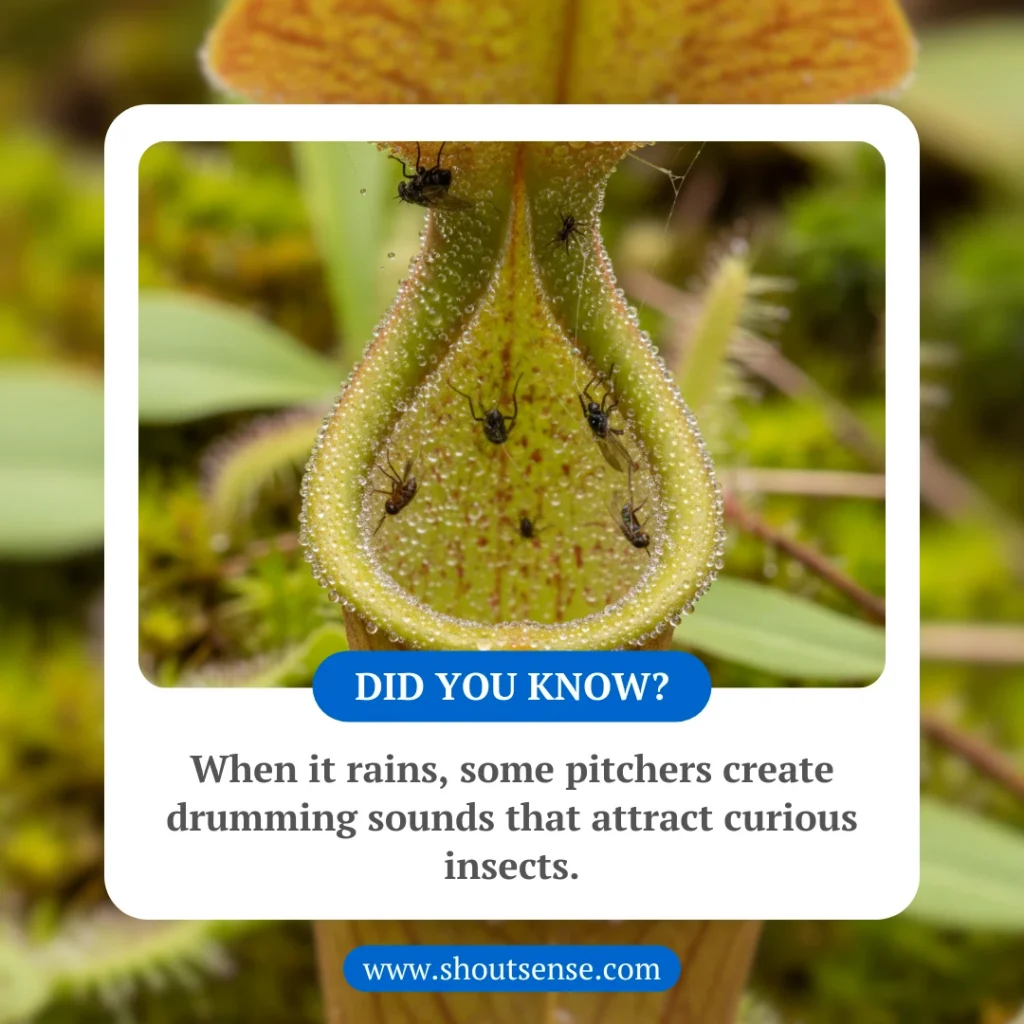
Pitcher plants have developed strategies to catch their prey, using their surroundings to trap prey more efficiently.
One example is Nepenthes gracilis.
The impact of raindrops causes the lid to vibrate, moving insects and trapping them in their trap.
Instead of finding a safe place, insects end up being captured by the plant.
Wrap-Up
Pitcher plants are more than carnivorous predators—they are shelters, nurseries, and even teachers for human innovation.
Every curve, every droplet, every waxy surface tells a story of survival, adaptation, and unexpected friendships.
They blur the line between danger and refuge, predator and partner, showing that life in the wild is as intricate as it is captivating.
Fascinated by the secret lives of pitcher plants?
Drop a comment and share your favorite wild partnerships!
Let’s explore together how these living traps reveal the hidden wonders of nature.