Want more fun facts? – Visit here
3. The liquid inside works like a tiny stomach with digestive juices.
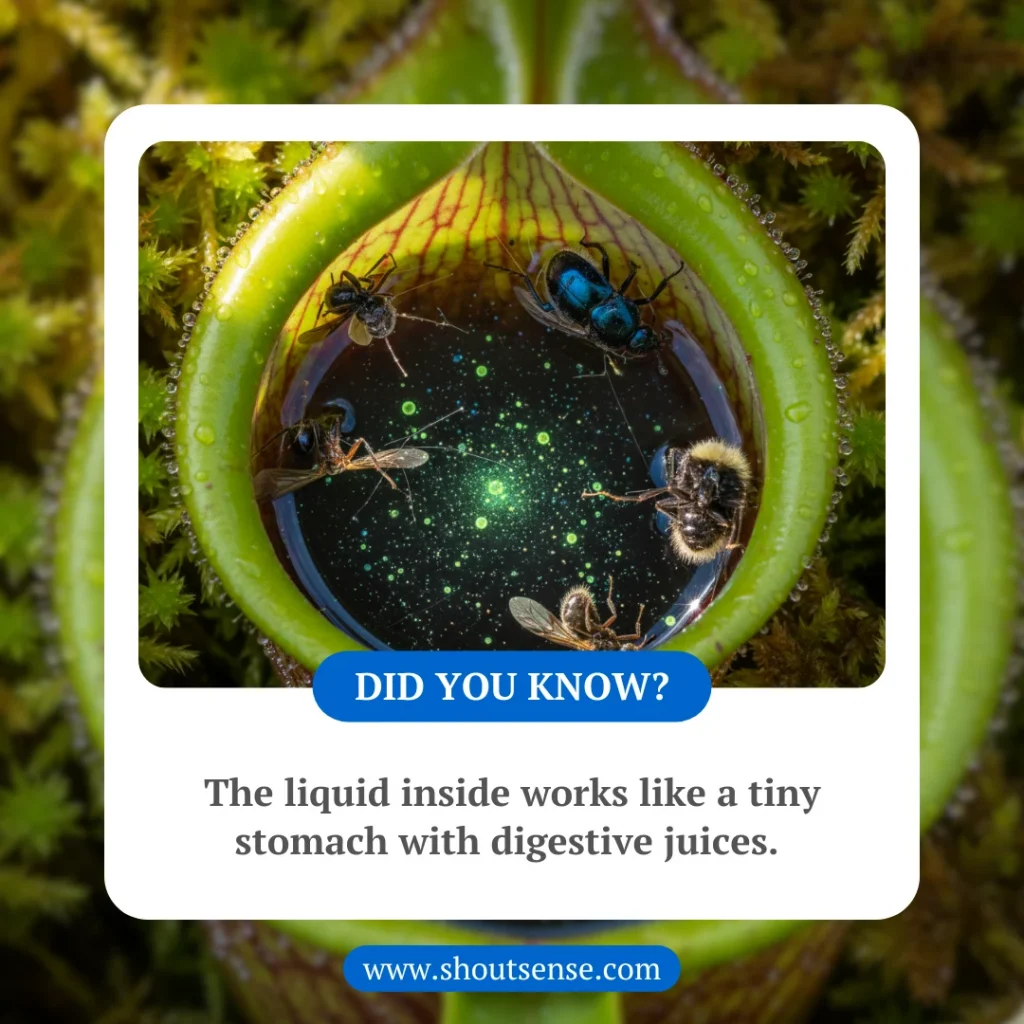
The fluid inside pitcher plants acts like a miniature human stomach, containing digestive enzymes produced by the plant that break down prey into usable nutrients for the plant.
These enzymes include proteases for protein digestion, chitinases for breaking down insect exoskeletons, and other enzymes such as esterases and phosphatases.
Altogether, they’re a complete digestive system for the plant. In addition to plant-derived enzymes, pitcher fluids also host rich microbial communities.
4. Some species glow under ultraviolet light at night, guiding insects like runway lights.
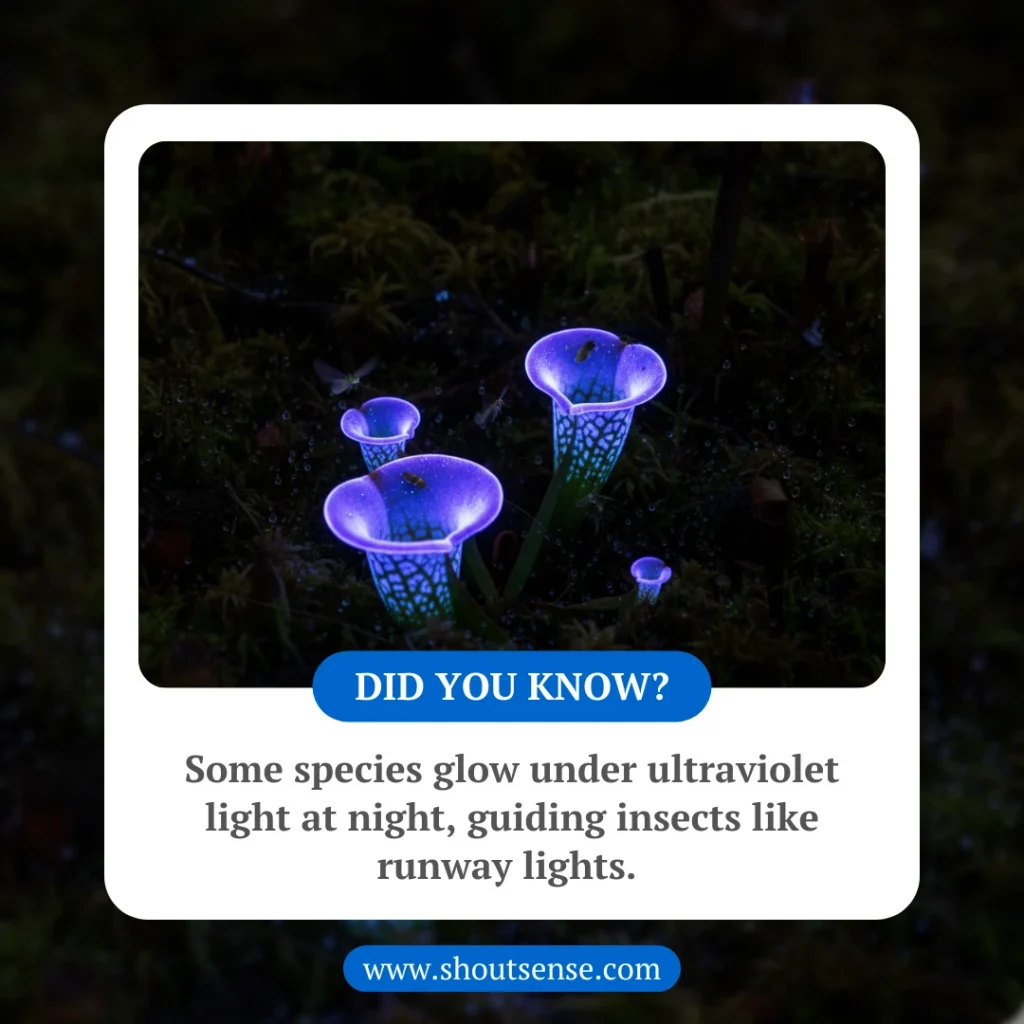
Some pitcher plants, such as Nepenthes and Sarracenia, show UV-induced biofluorescence.
This creates glowing blue rings along their rims that help attract insects.
This is caused by metabolic compounds that absorb ultraviolet (UV) light and re-emit it as visible light, something many insects can see, even though humans cannot.
These glowing patterns are strongest in young traps and fade as the traps age and die.
5. The giant Nepenthes rajah can grow pitchers big enough to trap rats and lizards.
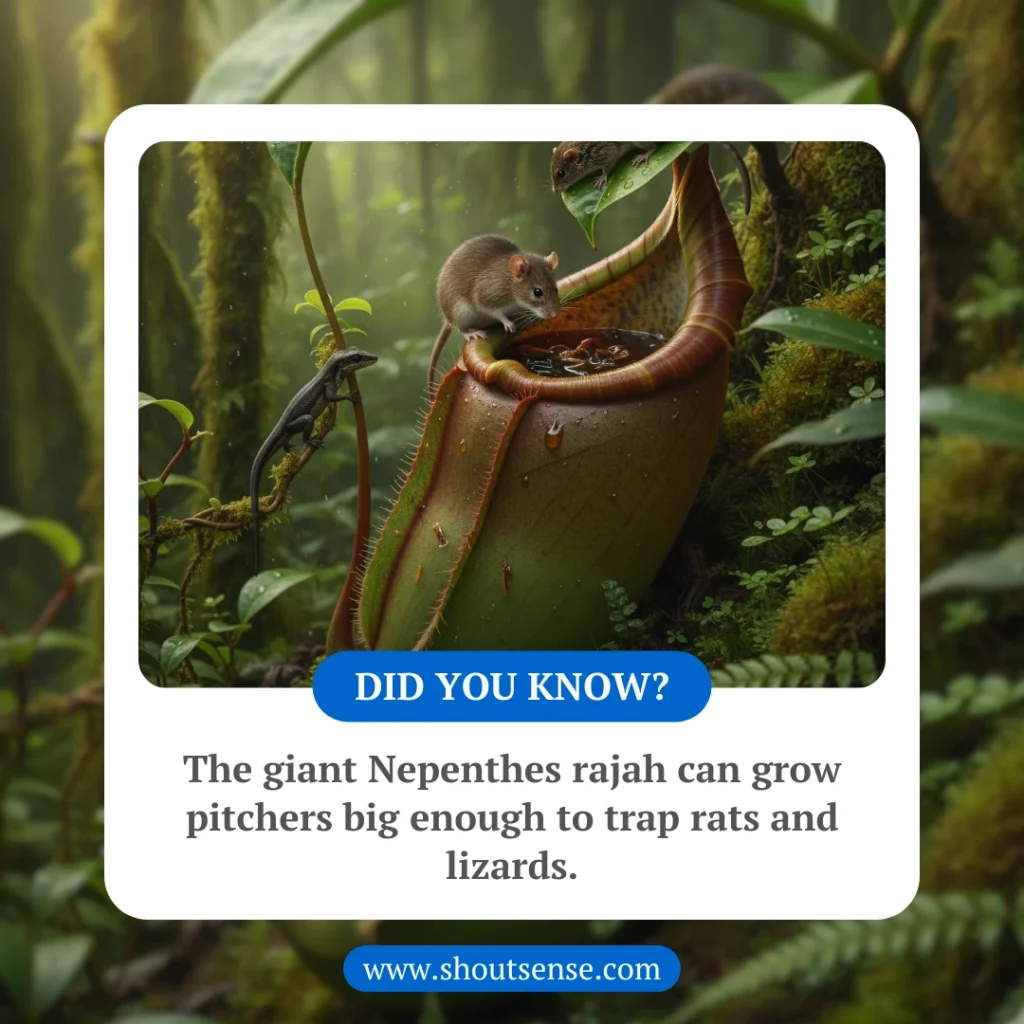
The largest carnivorous plant in the world is Nepenthes rajah, a giant pitcher plant native to Borneo.
Its urn-shaped traps can grow up to 41 centimeters tall and hold as much as 3.5 liters of liquid.
While its main food source is insects, it is also capable of trapping small vertebrates such as lizards and rats.
Moreover, it benefits from a form of mutualism by collecting the droppings of small mammals, which supply extra nutrients.
Wrap-Up
Every curve of a pitcher plant hides a story of survival, every glow and scent a deadly invitation.
They are proof that nature can be as cruel as it is captivating, blurring the line between beauty and danger.
A silent predator in plain sight, waiting for its next meal.
If you love discovering the dark wonders of nature, this blog is for you. Want to learn more?
Comment below, and let’s dive deeper into the world of carnivorous plants together.